Going from three videos a month to thirty does not require more talent. It requires rules written down before they are needed.
Write the price-review rule before you need it
That is the local particularity, and it avoids one renegotiation a month.
When prices move fast, a rate fixed once becomes unliveable for the creator and a source of conflict for the brand. The solution is not to renegotiate at every order, it is to write the rule once: how often the rate is reviewed, on what basis, and with what notice.
Two formulations work. Review on a fixed date, every three months for example, announced in advance. Or indexation on a public reference, chosen by mutual agreement.
What matters is not the formula chosen, it is that it is written before the first tension. A rule agreed calmly avoids ten heated discussions.
How many pieces a month
The question is asked the wrong way round.
It is not "how many can we produce", it is "how many can we test". A brand running paid advertising needs several variants a week, most of which will be stopped quickly.
The useful marker: produce the number of videos your distribution budget can actually test. Twenty videos nobody has time to put online cost as much as twenty used ones, and bring in nothing.
Add a composition rule: out of ten videos, seven repeat a format that has already worked, two vary it, one tries something else.
What to bring in-house first
Not the shooting, contrary to intuition.
What gains most from being brought in-house first is coordination: the briefs, the product shipments, the follow-up, the approvals, the archiving. It is the least visible part and the one consuming the most hours.
Shooting stays external as long as possible, because it requires different faces, places and lives, which an internal team cannot supply.
Editing sits between the two: it comes in-house when the volume exceeds what a supplier can absorb without becoming a bottleneck.
The minimum system
Five elements, and nothing more.
A brief template fitting on one screen.
A list of creators with their category, their usual timescale and their current rate.
A product shipping calendar, with the real arrival date and not the dispatch date.
The rights table described in the box.
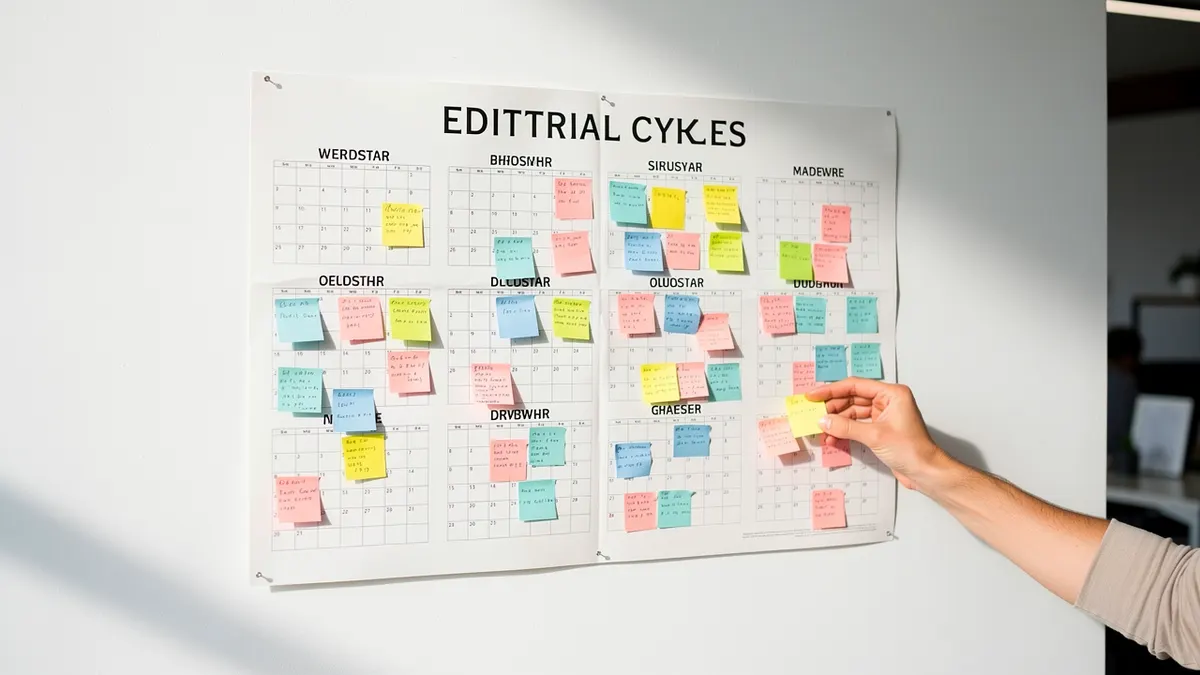
And a one-hour monthly review: what ran, what worked, what gets repeated.
What can be standardised without losing the natural feel
| Element | What you lock down | What stays free |
|---|---|---|
| The set | Two backgrounds used in rotation | The object placed on them |
| The edit | A template for cuts and subtitles | The words spoken |
| The exports | One set of formats, named alike | Nothing |
What a well-organised day produces
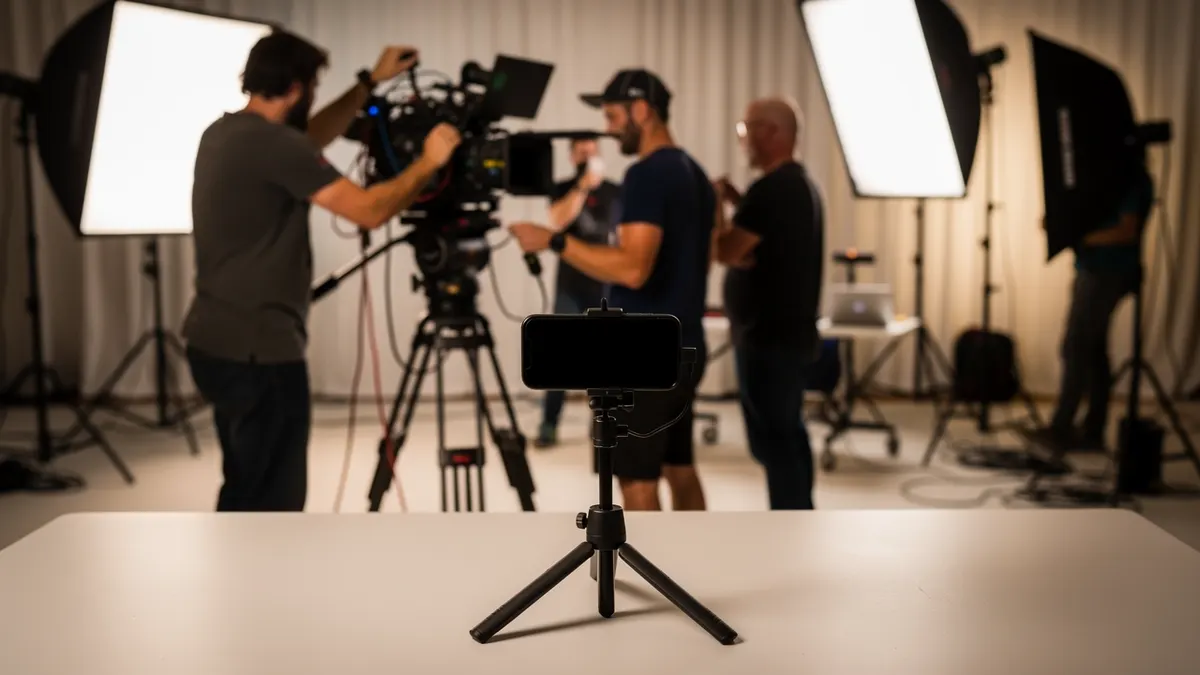
Six to eight short videos, if the products are prepared the night before, the set built once and the scripts written beforehand.
What breaks the rhythm
Looking for a prop mid-shoot, changing location between two takes, and redoing the colour balance on every edit.
What not to do
Three mistakes that cost dearly at this scale.
Multiplying creators without keeping any. A stable pool of six people who know the brand produces better and faster than thirty strangers.
Ordering in bulk to get a price, without having checked that the format works. A failed batch is paid for in full.
And letting rights run without tracking them. A video running after its licence has ended is a legal problem, not a saving. The obligations applicable to the rights granted, to disclosures and to the people filmed depend on your situation and are checked with a lawyer.