Baby products are the category where trust decides everything. Nobody buys something for their newborn because a video was well shot. They buy because someone credible showed that it works, and that it can be checked.
In Argentina one particularity is added and it changes how the script is written: the person paying is often not the person using.
Two audiences in the same video
A newborn is equipped by a circle, not by a couple. Grandparents, godmother, aunts, colleagues at a baby shower: a large share of what enters the house is a gift.
That creates two viewers for the same video, and they are not looking for the same thing.
The parent wants to know whether the object holds up, how it washes, whether it survives the night, what breaks first. They watch with suspicion, and rightly so.
The gift giver wants to know whether the present will be useful and whether it duplicates what others are bringing. They watch wanting to get it right, and they decide fast.
A video that only speaks to the parent loses half the buyers. The remedy is one sentence slipped into the script: say when the product is useful, and until when. That is exactly the information both need, for different reasons.
What matters when the budget is tight
A baby purchase is almost never isolated. It sits in a run of spending concentrated into a few months, and it is weighed against the second hand market, which is very active there.
Three things therefore weigh more than elsewhere in the content.
What lasts. A product that serves from zero to three years does not compare with one that serves six months, and saying so is a price argument, not a technical specification.
What resells. Showing an object clean after use, saying what comes apart and washes, answers a question the parent is already asking.
What replaces something else. A product that avoids a second purchase is worth its price. Showing it in use beats stating it.
What actually converts
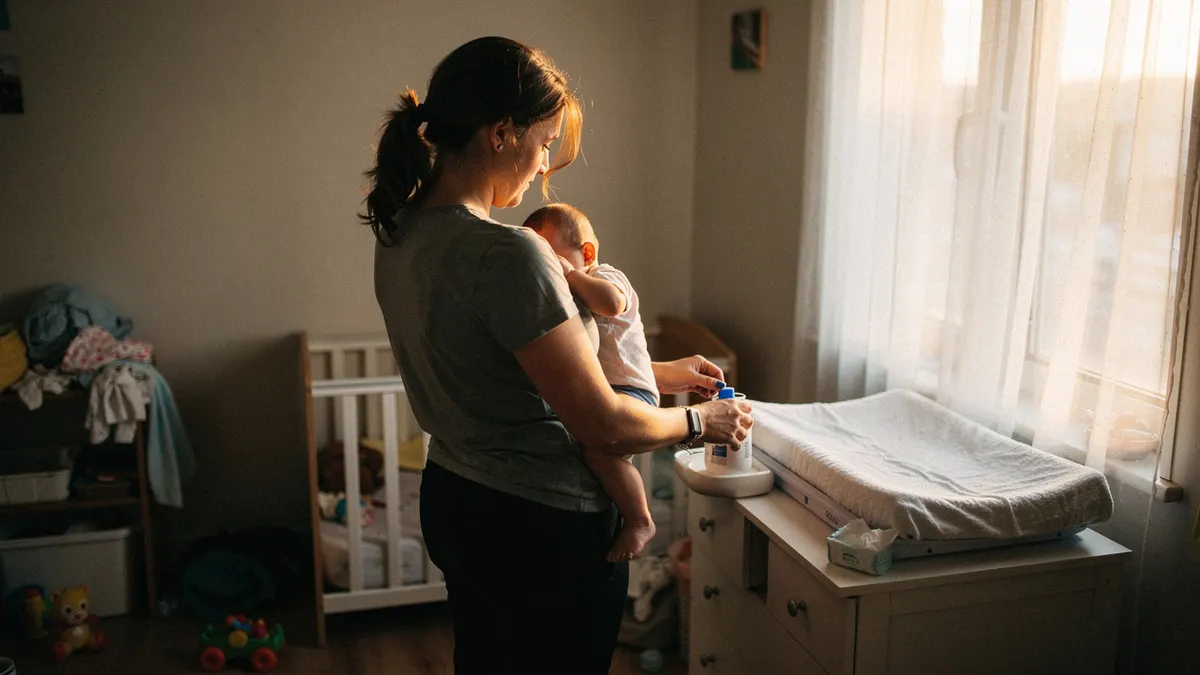
The real gesture. Fitting, folding, cleaning, one handed, with a baby in the other arm. That is the demonstration nobody can fake.
The night. What happens at three in the morning is the moment of truth in this category, and almost no brand films it.
Before and after washing. Stains, seams, how the fabric holds. This is what the product page never shows.
The second child testimony. A parent saying they kept the item from the first and are reusing it is the strongest proof available.
Safety shown, not claimed. The fastenings, the distances, what locks. An image beats a promise in a category where the promise is regulated.
Which creator to hire
A real parent, with a child of the target age. This is non negotiable: an adult handling a product with no child is visible immediately, and the viewer stops listening.
Look too for a home that resembles your customers'. An ordinary flat sells better than a magazine nursery, because the parent's question is always whether it fits in their place.
The brief and the claims that are off limits
Give the exact instructions for use, the age range, what absolutely has to be shown on the safety side, and three possible openings.
Attach the list of what may not be said. In this category it is not optional: health, safety and child development claims are regulated, and the risk falls on the brand. When in doubt the source is the competent authority, never a competitor's wording.
What a brand expects by target age
| Age targeted | What must be visible | What is banned on camera |
|---|---|---|
| Newborn | Handling with one hand only | The child alone on a raised surface |
| 6 to 18 months | Cleaning the product fully | A harness fastened wrongly |
| 2 years and up | Storage and real footprint | A loose part within reach |
What can be filmed without the child
Assembly, folding, washing, storing: half the useful shots require nobody present.
What requires written consent
Any appearance of a child, even from behind, and any identifiable parent's voice.
The calendar
Births follow no season, but gifts do. Mother's Day in October, the end of year holidays, and the March restart of nurseries and kindergartens concentrate the gifted purchase decisions.
Sources
Checked on 4 September 2026. Thresholds and rates change: where this guide and the official source disagree, the official source is right.