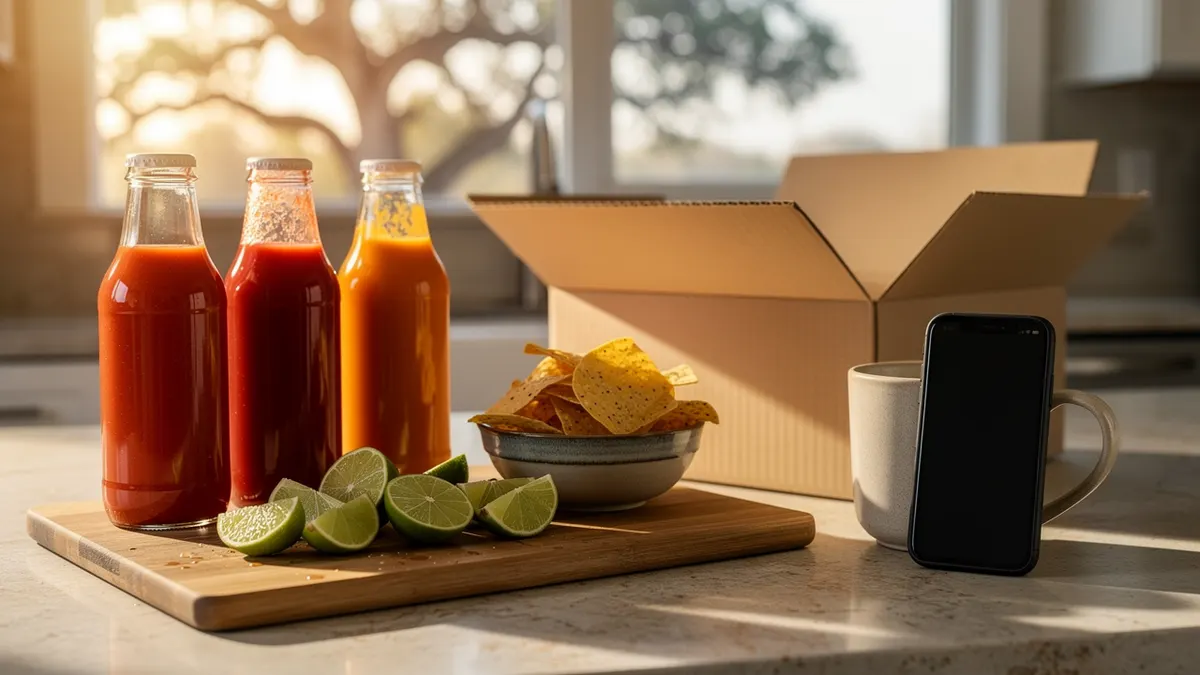
The founder of a hot sauce brand in East Austin replies to a creator's message at 11 p.m. with a voice note, a shipping confirmation and the line "just make it feel like you". There is no brief, no purchase order and no legal review; there is a person who started the company three years ago, still runs the ad account, and will watch the video on their phone the moment it arrives. Two weeks later the same founder is at a food festival handing out samples, filming on their own phone, and asking whether the creator can come by on Saturday.
That is the Austin buyer. The city's consumer economy is founder-led: food and beverage, wellness, apparel, outdoor and home brands started here by people who are still in the building, alongside a startup scene that borrowed the same informality. For a creator that is a market where the first yes can arrive the same day, and the one where the absence of a process has to be replaced by the creator's own.
The founder is the buyer, and the founder is busy
Speed is the currency
A founder-led brand decides in a day and expects the creator to move at the same speed: product shipped tomorrow, video next week, a second batch if the first one worked. The upside is obvious. The downside is that nothing is written down unless the creator writes it, and the founder who said "just make it feel like you" will still have an opinion about the color of the kitchen when the video arrives. The habit that works here is a one-page confirmation sent back within the hour: what will be filmed, how many videos, when, for what use, at what price. It is not bureaucracy; it is the brief the founder did not have time to write, and founders are grateful for it more often than not. The guide to what a UGC brief is gives the skeleton.
Product for content is an offer to price, not to accept
Austin brands with more product than budget make a specific offer: a case of the product, a discount code, sometimes a share of sales, in exchange for videos. The guide to product seeding versus paid UGC draws the line; the Austin version is to answer with a paid quote that lists the product at its retail value as one line, a case that sells for $40 written as $40, so the founder sees the number instead of the gift, and a founder who runs the ad account will read it. If the box arrives anyway, the Federal Trade Commission's guidance treats free product received with the expectation that you will promote it as a material connection, and the disclosure travels with the post, paid or not.
Being on site is a real part of the job
Unlike the remote-by-default markets, Austin brands often want the creator present: at the taproom, the pop-up, the festival booth, the founder's own kitchen. The city's calendar is thick with events that brands treat as content opportunities, and a creator who is available on a Saturday, arrives with a phone, a small light and a plan, and leaves with twenty usable clips is the person the founder texts before the next one. That work is priced by the half-day or day, not per video, with the clip count agreed before Saturday.
What Austin brands actually order
Food and beverage want the product used, poured, cooked and eaten by a person who looks like a customer, in a kitchen that looks like a home; wellness wants a routine and a result stated carefully; apparel and outdoor want the product outside, in Texas light, on a body that looks like the buyer. All of them want the founder's voice kept: a brand that was built on a personality does not want a video that sounds like a national ad, and a creator who sands the tone down to sound professional is delivering the agency video the founder chose not to buy. The Atlanta guide makes the same point about a different culture; in Austin the culture is the founder's.
The second buyer is the startup, software and hardware, which behaves like the Bay Area described in the San Francisco guide, with test batches, screen recordings and growth marketers, and with the one Austin addition that the growth marketer may also be a founder who reads every comment.
Texas, and what it does to the rate
Rates in Austin are local rates, and the Texas arithmetic the Houston and Dallas guides describe applies here too: the Texas Comptroller states that Texas has no personal income tax and that sole proprietorships are exempt from the state franchise tax, so a given gross keeps more of its value than the same gross in California. The objection founders raise is that a three-year-old company cannot pay what a coastal brand pays. The answer is scope, not rate: a founder who cannot afford five videos can often afford three with the raw files, which is a better deal for both sides than five videos at a rate that does not cover the work.
The first month in Austin
- Pick three founder-led brands whose product you already use, buy it if you have to, and film one spec ad each, presented the way the guide to building a portfolio for American buyers says spec work is presented.
- Send them to the founders directly, with one line about availability for on-site days, because founders here read their own messages.
- Confirm every yes in writing within the hour: deliverables, date, usage, price, product included or not.
Sources
- Federal Trade Commission, The FTC's Endorsement Guides: What People Are Asking
- Texas Comptroller of Public Accounts, Starting a New Business
Checked on 20 September 2026. This guide is not legal or tax advice. Where this guide and the official source disagree, the official source prevails.