Walk down a Nashville street on a weekday afternoon and every third doorway has a sound coming out of it: a rehearsal, a writing session, a bar with a band at four o'clock. The city's economy is built on music the way Los Angeles's is built on pictures, and it shows up in creator work in a way newcomers do not expect. The brief here is judged by its sound. A brand that lives among songwriters and engineers notices a badly recorded voice, a track that does not fit and, above all, a song the brand does not have the right to use.
Sound is what Nashville judges first, and around it sit two large, quiet buyers, healthcare companies headquartered here and a hospitality industry built on visitors, plus the consumer brands that grew out of the city's own culture.
Sound is the deliverable
The music a brand can run
A creator's instinct is to put a familiar song under the video. In Nashville that instinct meets the industry that owns the songs. A recording and the composition behind it have owners, whether an ad may use them is the owners' decision, and the brand running the ad is the one who will be asked to show the license. That is why brands here ask what music is in the video before they ask anything else, why the platforms offer commercial sound libraries, and why the safest deliverable is one whose sound the brand cleared or one delivered without music so the brand adds its own. The objection creators raise is that the song is everywhere online already; a brand that lives among rights holders does not find that reassuring. A creator who says "I used a library track the brand can license" has answered the Nashville question; one who says "I used the song everyone is using" has created a problem the brand will hand back.
The voice is the instrument
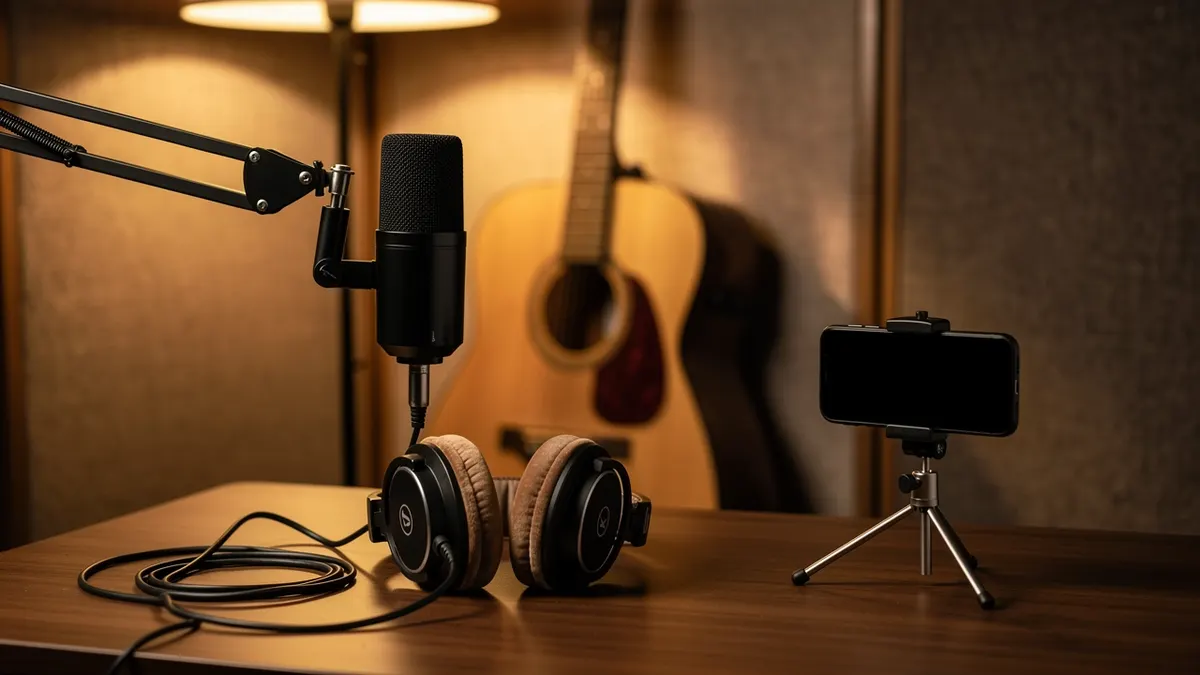
The other half of sound is the creator's own. A city of vocalists and engineers has a high floor for how a voice is recorded, and a phone held at arm's length in a room with a hard floor does not meet it. A small lavalier or a directional microphone, a room with something soft in it, and a take where the voice sits in front of the picture are the difference between a video the brand uses and one it re-records. Some of the creators who do well here came from music or theater, and the craft they bring is not performance; it is delivery: pace, pause, the sentence that lands.
Sound-first briefs
Some Nashville briefs are built around sound on purpose: a product demonstrated by its sound, a testimonial that is really a spoken piece, a jingle-adjacent format where the creator's voice carries a line. Those briefs pay for the skill, and a portfolio that includes one clean, well-recorded voice piece is the way to be considered for them.
The two quiet buyers
Healthcare headquarters
Nashville is a headquarters city for hospital operators, health services and the companies that serve them, and their creator briefs look like the ones the Houston guide describes from the medical side: recruitment videos, patient-experience explainers, employer content, all reviewed by a compliance team and all built on claims that have to be true. The difference is scale. These are large corporations with procurement processes, vendor onboarding and approval chains, and a creator who has read the Dallas guide will recognize the purchase order before the brief. The work is steady, remote more often than not, and paid on terms.
Hospitality built on visitors
The second buyer is the industry that receives the city's visitors: hotels, bars, restaurants, venues, tours, and the events that fill them. Hospitality content is filmed on site, in the evening, in crowds, and the sound problem is acute: a bar with a band is a room where a voice cannot be recorded, so the format becomes visual with a voice added later or on-screen text. Comped stays, meals and tickets are common, a room that sells for $250 a night among them, and a comped stay or meal received so that you will post about it is, in the FTC's own framing, a perk received with the expectation that you will promote the advertiser, so the disclosure travels with the video. Price hospitality by the on-site day; the comp is the set you were handed, and it does not appear on the invoice as payment.
The consumer brands that grew out of the culture
Nashville's own brands, apparel, boots, food and drink, home goods with a Southern or a musical identity, hire creators for a voice the city recognizes and buyers elsewhere find authentic. The point the Atlanta guide makes about a culture that cannot be manufactured applies here in a different key: the brand wants the creator's accent, tempo and taste kept, and a creator who neutralizes them to sound national is delivering something the brand did not order. The brief will sometimes push the other way, toward a caricature; the craft is to be from here without performing it.
Delivering sound the Nashville way
- Record the voice separately from the picture when the location is loud, on a lavalier or a directional microphone, and sync it in the edit.
- Deliver every video in two versions, one with the library track the brand can license and one with the voice only, so the brand can add music it has cleared.
- Put the source of every sound in the delivery note: the library, the license, the take. The brand's question will come, and the note answers it before it is asked.
Sources
Checked on 20 September 2026. This guide is not legal or tax advice. Where this guide and the official source disagree, the official source prevails.