Filming children brings obligations, and the season is so concentrated that the calendar decides the campaign.
Filming a child requires a framework
Three elements, obtained before the shoot and not after.
Written authorisation from the parent or guardian, specifying the duration, channels and territory of use.
A revocable agreement: plan for what happens if the family later asks for the video to be withdrawn.
And shooting rules: limited duration, the parent present, no shot allowing a school, an address or a uniform to be identified.
The rules applicable to advertising aimed at children and to filming minors vary by province and by medium, and are checked with a lawyer before publication.
Hands are often enough
That is the solution simplifying everything, and it makes better videos.
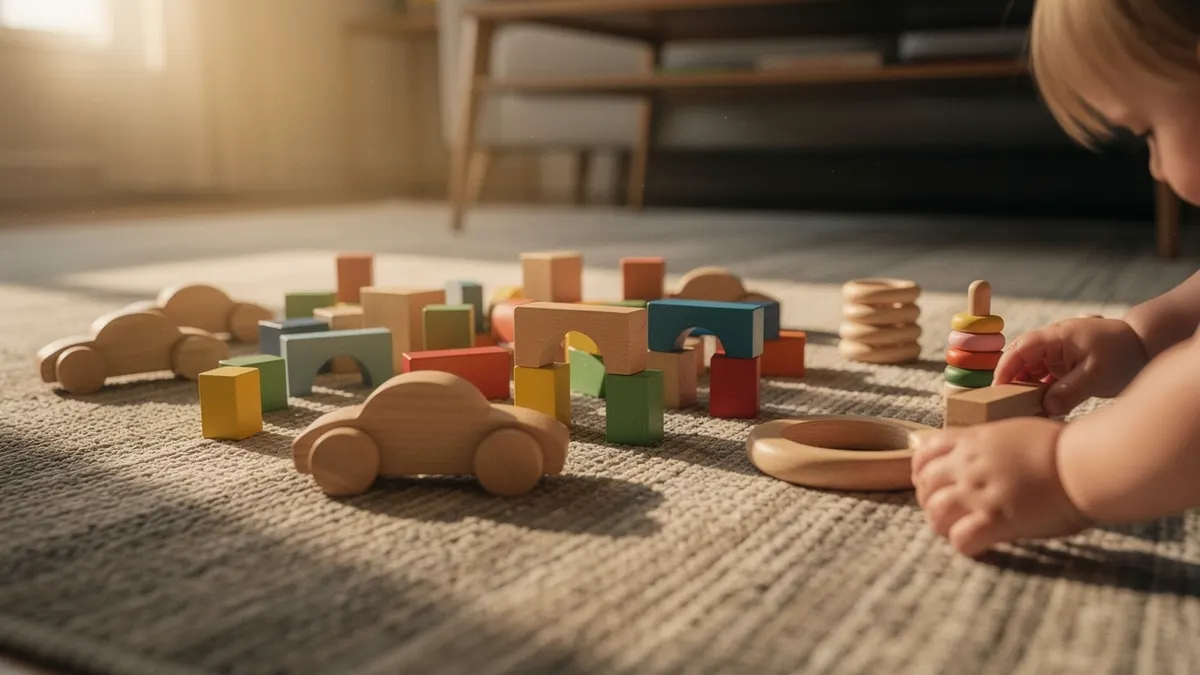
A pair of child's hands handling, opening, assembling, failing and starting again is enough to show the toy, and it avoids a large part of the consent questions tied to the face.
Two useful variants: an adult hand showing, a child's hand using; and the point-of-view shot, camera on the floor, which gives the toy's real scale.
Show the toy that survives a real child
That is what the parent is looking for, and nobody films it.
Three proofs beat every argument: the toy after three weeks of use, the toy falling off a table, and the toy being cleaned.
Add what breaks first and what can be replaced. A brand showing the spare part available sells better than a brand showing a new toy in perfect light.
The season is brutally concentrated
That is what decides the whole production.
Most of the year plays out over eight weeks, and retailers' buying decisions are made well before, in spring.
Three consequences. Shoot in summer to publish in November. Never date the image: no seasonal decoration, otherwise the video dies on 26 December. And plan, from the shoot, an after-the-holiday variant showing the toy in ordinary use, which works all through January.
What the rules impose when a child appears
| Point | What is needed | Otherwise |
|---|---|---|
| Permission | Written consent from both parents | No release |
| Duration | A short shoot, outside school hours | A shoot that unravels |
| Wording | No direct appeal to the child | A rejected ad |
What is filmed without a face
The hands opening the box, the game seen from above, the tidying up. The toy is the subject, and those shots avoid every permission tied to a minor's image.
What is read on screen rather than spoken
The recommended age, the number of pieces, whether batteries are needed and the safety warnings. Filming the box avoids rephrasing, to be confirmed with a lawyer.
What else to ask for
Four elements to write into the brief.
The stated age range, said exactly as it appears on the box: it is a safety indication, not a marketing argument, and it is not to be altered.
The complete absence of any phrase encouraging a child to ask their parents to buy.
The original sound, because the toy's real noise is part of the decision.
And a version with no child on screen, usable anywhere and immediately, which protects you if an authorisation is withdrawn mid-campaign.