How food, delivery and restaurant brands in Brazil use UGC, the formats that convert, and how to start.
Why UGC is made for the Brazilian food market
Five reasons specific to the country.
Ordering at home has entered daily habits, not only occasional ones.
The choice happens in an app, on thumbnails, where a real video immediately stands out from official photos.
The doubt is about portion and temperature, two things no photo proves.
Regional cooking is a permanent subject of conversation, which gives each city its own vocabulary.
And price counts, so the quantity-for-price question dominates.
The formats that work for restaurants and delivery
Six formats, ranked by effect on orders.
The order being opened at home, dealt with above.
The portion shown to scale, next to a hand or a piece of cutlery.
The first bite filmed from the side, never from above: it is the only angle showing texture.
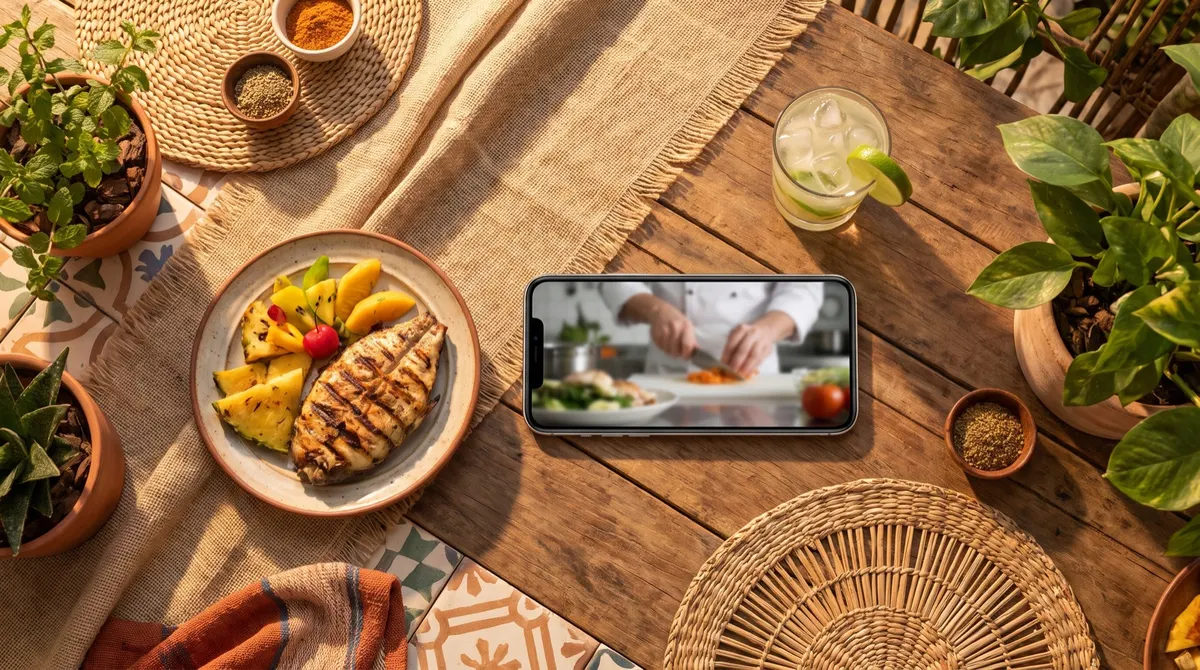
The preparation in the kitchen, filmed by the team, which reassures on hygiene and freshness.
The most-ordered dish explained by the person who makes it.
And the dining room at the end of the day, for a restaurant wanting to fill tables rather than deliveries.
Drinks: a playing field of their own
Four points for restaurants, without repeating the logic of drinks brands.
A drink sold with a dish is filmed in the same shot as the plate, not separately.
The serving gesture, pouring, squeezing, stirring, films better than the finished glass.
Alcoholic drinks obey their own communication rules, whose arrangements are checked with the competent authorities before the shoot.
And a drinks list is shown three seconds per item, never as a scrolling menu.
From organic video to performance
Six steps to move from a post to a campaign.
Publish first on the restaurant's account, which costs nothing and gives a first signal.
Spot the video that held attention best, not the one most liked.
Produce two opening variants of it, on the same body.
Run it as local advertising, with a tight geographic radius around the outlet.
Measure orders, not views, using a dedicated code or link.
And buy the advertising rights from the creator if the video works, which must be provided for in the initial quote.
What makes food look appetising
| Shot | What it triggers | The condition |
|---|---|---|
| Rising steam | The feeling of heat | Film within the minute |
| The cheese or sauce pull | The texture | Side lighting |
| The crunch | Sound before image | No background noise |
What is prepared before switching the camera on
Two plates: one for the shots, one to eat. The first cools and degrades in five minutes, and a dish that has dried out cannot be rescued.
What is verified before naming an ingredient
An allergen, an origin, a storage method or a nutrition claim. Those four are read on the packaging and confirmed with the manufacturer, never from memory.
Where to start
A reasonable starting order for a restaurant or food brand.
Two home deliveries opened by real customers, one kitchen preparation, one portion to scale and one first bite. Five videos, two people, one on-site session plus two shoots at home.
Four points to write into the brief.
Prohibited claims: no promise of health, weight loss or nutritional benefit that is not authorised for the category, to be checked with the competent authorities.
Allergens and mandatory mentions, when they appear on screen.
Clear identification of commissioned or paid content.
And the ban on filming a dish that is not the one sold, including for aesthetic reasons.
One last marker: in Brazilian food, the most profitable video is almost never the prettiest. It is the one showing the real quantity, the real temperature and the real gesture, filmed where the customer will eat.
Sources
- Portal do Empreendedor (MEI), Brazilian government
- Receita Federal, Brazilian tax authority
- Simples Nacional, official portal
Checked on 4 September 2026. Thresholds and rates change: where this guide and the official source disagree, the official source is right.