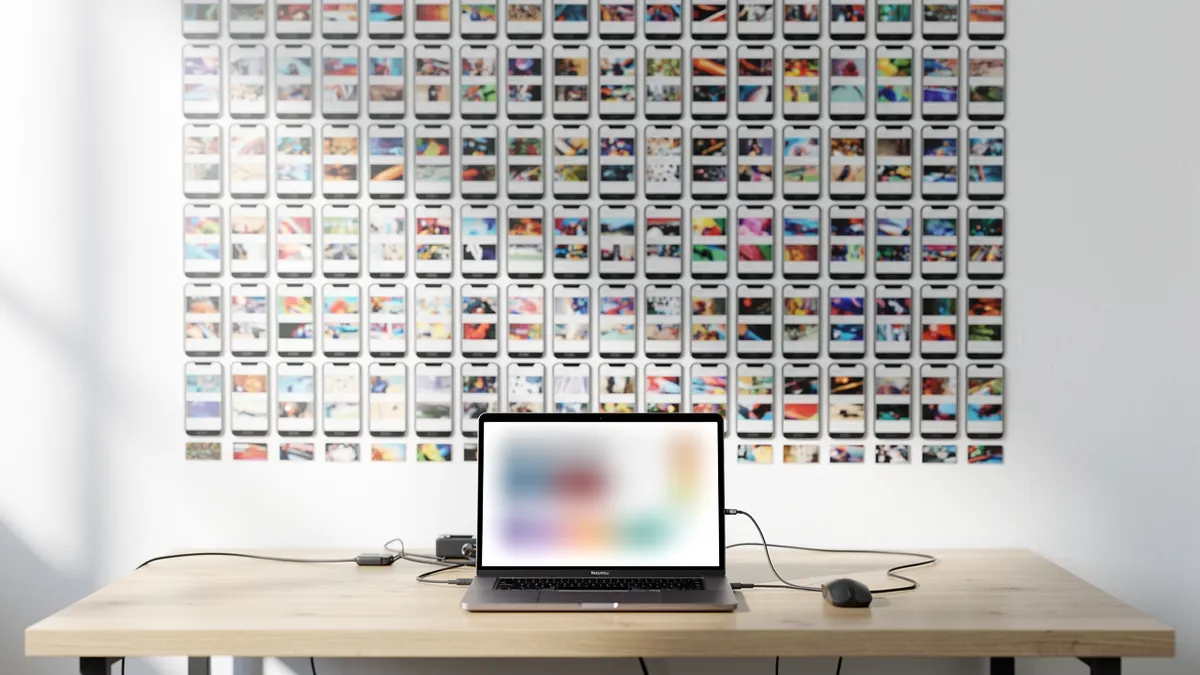
In advertising, the creative has replaced targeting. What decides the result is no longer who you speak to, but how many different versions you are able to put live.
The loop that works
Five stages, and none can be skipped.
Produce in batches: five to ten creatives at once, with different creators and different angles. An isolated creative teaches nothing, because it has nothing to be compared with.
Launch them all together, same budget, same audience, same landing page. It is the only way to know what comes from the video.
Let what does not work die, but only after the minimum budget decided at the outset.
Cut up the winner: four different openings, a short version, a long version, a version with no music.
And renew before the fall, not after: a creative is replaced when its cost starts rising, not when it has doubled.
What changes in the script when it is for advertising
Three differences, and they are structural.
The hook is an image, not a sentence: what is seen in the first two seconds decides everything else.
The useful information comes before the list: the viewer does not stay for an enumeration, they stay for an answer.
And the video has to work without sound, with subtitles legible on light and dark backgrounds alike, because most first seconds are watched in silence.
The Brazilian details
Two points shift the mechanics.
Instalment payment changes the nature of the decision: the question is no longer the price but the commitment over time. A creative that tackles that objection head on often does better than one insisting on price.
Statements about price, financing and promotions come from the brand's approved documentation, and the applicable obligations are checked with the competent authority and with a lawyer before distribution.
And the commercial calendar is highly concentrated: a few dates absorb a significant share of annual demand. A creative tested during those peaks compares with nothing, and one launched just afterwards starts with a handicap.
Rights, the point that blocks campaigns
It is the most frequent and most expensive mistake.
A licence covering the brand's own account does not cover paid advertising. The discovery is made at launch, in a hurry, and the extension is then paid at full price.
So write it from the first contract: duration, territory, channels, paid advertising included or not, and the price of the extension. Add what becomes of the variants cut from the original video, which are almost always forgotten.
What separates an ad from a post
Six adjustments before it runs.
A hook that lands within a second.
A clear disclosure of the advertising.
Subtitles that carry with the sound off.
A frame with no text near the edges.
An ending with exactly one action.
And three versions of the same shoot to compare.
What to deliver to launch a test
| Element | Useful quantity | Why |
|---|---|---|
| Hooks | Three per video | The first driver of results |
| Formats | Vertical plus square | Two placements |
| Subtitles | Burned in | Silent playback |
| A version with no text | One | Later adaptation |
What changes between two trials
One variable only. Changing the hook and the edit at once gives an unattributable result, and the budget spent teaches nothing.
What gets a video rejected at approval
An unverifiable claim, a before-and-after with no disclaimer, text promising a result, or a missing partnership disclosure when the brand has paid.
What to measure
Three figures, and only one decides.
Cost per usable creative, three-second retention which judges the hook, and cost per purchase which judges the whole.
If retention is good and purchases are poor, the problem is the page, not the video. That is the mistake that gets the most good creatives thrown away.