The product arrives twenty minutes after the video, in a bag, on a scooter. It is the only category where the image and the reality are separated by a journey.
Filming what will actually arrive
Three compulsory shots, and they are not those of a menu.
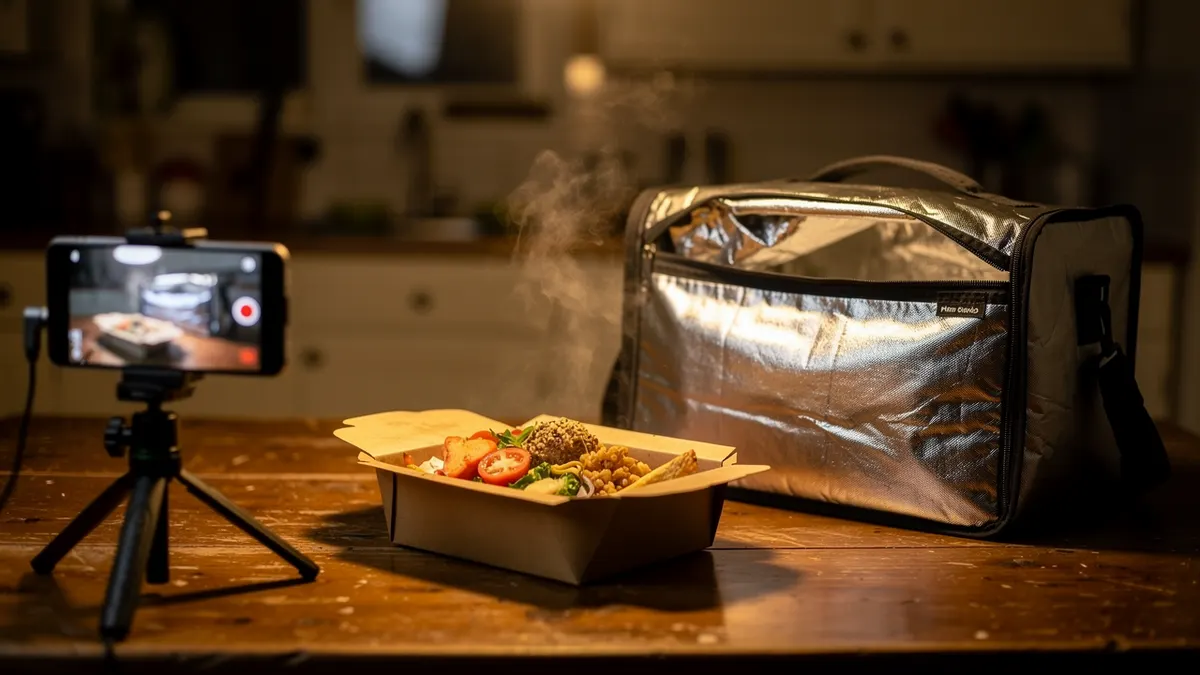
The bag as it is handed over at the door. The opening, in one take, without a cut. The dish taken out and set on a normal table, not on a studio worktop.
Add the quantity seen next to a familiar object: portion size is the question everybody asks and nobody shows.
The shooting time decides the campaign
Midday light is not the light of an order.
Most orders are decided in the evening, often late, in a room lit artificially. A video shot in full daylight does not resemble the moment when your customer watches it.
So shoot at least one version in the real conditions of consumption, and keep the bright version for other uses.
Packaging, temperature and transport
That is the technical subject of the category and nobody covers it.
Show what holds up and what does not: the sauce served separately, the bread wrapped apart, the lid that does not leak, the label stating the contents. Those details are worth more than a handsome plate, because they answer the real fear.
If a dish travels badly, say so and offer something else. That sentence builds trust and avoids a refund.
Ghost kitchens and trust
Many brands have no dining room, and the customer senses it without being able to name it.
So show what does exist: the kitchen, the people working in it, the act of preparation, the moment the bag is closed. The absence of a dining room is not a problem; the absence of a face is.
What triggers the order
Not the dish.
It is the delivered price, the time announced, the certainty that it will arrive hot, and knowing what to do if the order is wrong. A video handling those four points converts better than a video that films better.
Say too what happens in case of an error, and who answers. It is the least used argument in the category.
A local creator, not a generic one
The flat, the street, the building and the accent place the video in three seconds.
Content shot in a neutral setting says nothing about the neighbourhood you deliver to, and the viewer recognises nothing. Film in somebody's home, with the real front door and the real landing.
What meal delivery actually orders
| The buyer | Their typical order | What they require |
|---|---|---|
| A platform | The order and the handover | A clear advertising disclosure |
| A partner restaurant | The dish and the packaging | An appetising, faithful look |
| A drinks brand | The pairing with the meal | Legal wording if alcohol |
What makes a food shot credible
Steam and movement. A dish filmed motionless looks cold, whereas a spoon going in, a sauce running or visible steam reads immediately as freshly made.
What to show and not to show of a delivery
The bag, the handover, the opening: yes. A courier's face or vehicle plate: only with their explicit consent, because a person at work is not a set to film freely.
What cannot be promised
A guaranteed delivery time, an unverifiable origin or composition, a health claim.
The rules applicable to allergen information, to the naming of dishes and to claims depend on the sector: they are checked before going live, with a legal professional in case of doubt.
Sources
Checked on 4 September 2026. Thresholds and rates change: where this guide and the official source disagree, the official source is right.