What holds somebody back before making an appointment is not always the treatment itself. It is often the fear of being left alone once it is all over.
What the rules allow you to show
That is the starting point, and it is checked before writing.
The communication of health professionals, advertising relating to procedures, products and premises, the use of testimonials, comparisons and mentions of results fall under precise rules depending on the profession, the type of practice and the procedure concerned.
They are checked against the applicable rules and with the competent body, with a lawyer in case of doubt. A video can be corrected; non-compliant communication is paid for differently.
What actually converts
Four pieces of content, none showing a result.
The pathway recounted in the past tense by somebody who lived it, including what was difficult. The tour of the place, filmed as you arrive. The professional's explanation of a general notion, with no promise. And the practical information: hours, access, duration, what to bring.
Those four formats are shot in half a day and serve two years.
Price and terms, said clearly
In this market, silence on that point costs appointments.
Say that a quote exists, how it is obtained, what it includes, and whether payment in instalments is possible. The exact conditions belong to your financial partner and are checked with them; the rules applicable to communication about credit are checked before going live.
Put no figures on screen: amounts change and the video remains.
Health data
It is handled with greater caution than anything else.
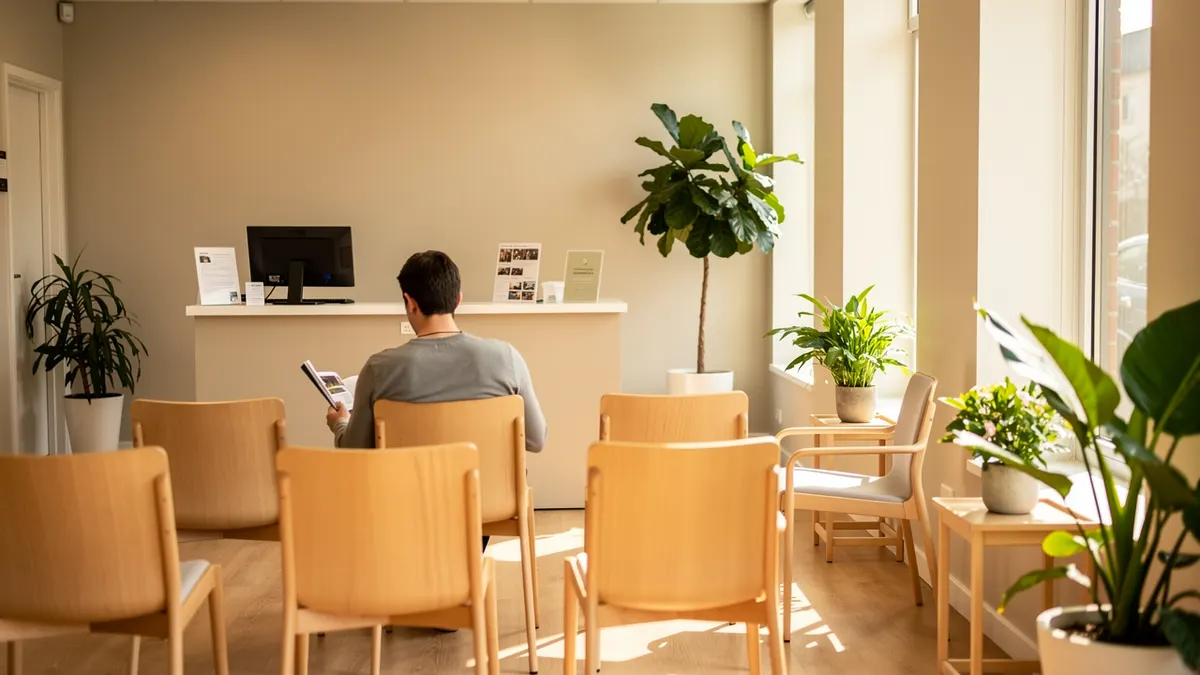
Never film a screen, a file, a schedule, a label or an occupied waiting room. Show no identifiable person without a specific written agreement, and check the applicable rules before any filming in a care setting.
If there is doubt about a shot, it is cut: no image is worth that risk.
Which creators to hire
Two profiles, depending on the use.
The professional themselves for everything educational: they carry the trust, and their hesitation on camera is worth more than a performed ease. An outside creator for the pathway and the place, filmed from the point of view of somebody arriving who knows nothing.
The second asks the questions the first stopped asking long ago.
The brief that produces good material
Two columns, one page, signed by both.
On the left, the facts that may be said. On the right, what must be neither said nor suggested, including out loud and in a reply to a comment. Add the list of items forbidden in frame.
That document protects the practice from non-compliant communication, and the creator from a request they cannot accept.
What this sector can order, and on what terms
| The buyer | Their possible order | Their absolute limit |
|---|---|---|
| A clinic | Presenting the premises | No identifiable patient without consent |
| A practice | Explaining an administrative pathway | No medical advice |
| A device manufacturer | Handling by a professional | Approved and sourced wording |
What is never shown
A patient, a file, a care screen. Those images fall under confidentiality and publishing them exposes the organisation far beyond a communication problem, even with a badly drafted authorisation.
What the video can say without risk
The place, the welcome, the practical organisation and the access. Anything touching diagnosis, treatment or expected outcome belongs to a health professional, and is explicitly referred to them.
What to measure
Not views.
The number of appointment requests, the share of recurring questions that disappear from the phone, and the proportion of people who actually turn up for the first appointment. That last figure is the best indicator that a video properly prepared people.