How to build trust on video, the strict limits of healthcare communication, and the formats that fill a diary.
The limits, to know before writing the brief
Four prohibitions that come up, in forms varying by profession.
Testimonials and patient reviews.
Images of results, before and after, including blurred or partial ones.
Comparisons with other practitioners or other methods.
And anything resembling an inducement: promotion, limited offer, price highlighted as an argument.
One organisational consequence: approval happens on the script, before the shoot, with a lawyer familiar with the profession concerned. A correction on a document costs ten minutes, the same correction after the shoot costs the whole sequence.
What remains possible and works
The practitioner's educational content
That is the category's most solid format.
The person explains a mechanism, a prevention, a daily gesture, without talking about their practice or promising a result. They appear competent because they explain, not because they assert.
Three subjects that work everywhere: what to do before an appointment, what is generally not known about a common practice, and frequent mistakes.
The tour of the premises
It answers a real anxiety, and it asserts nothing.
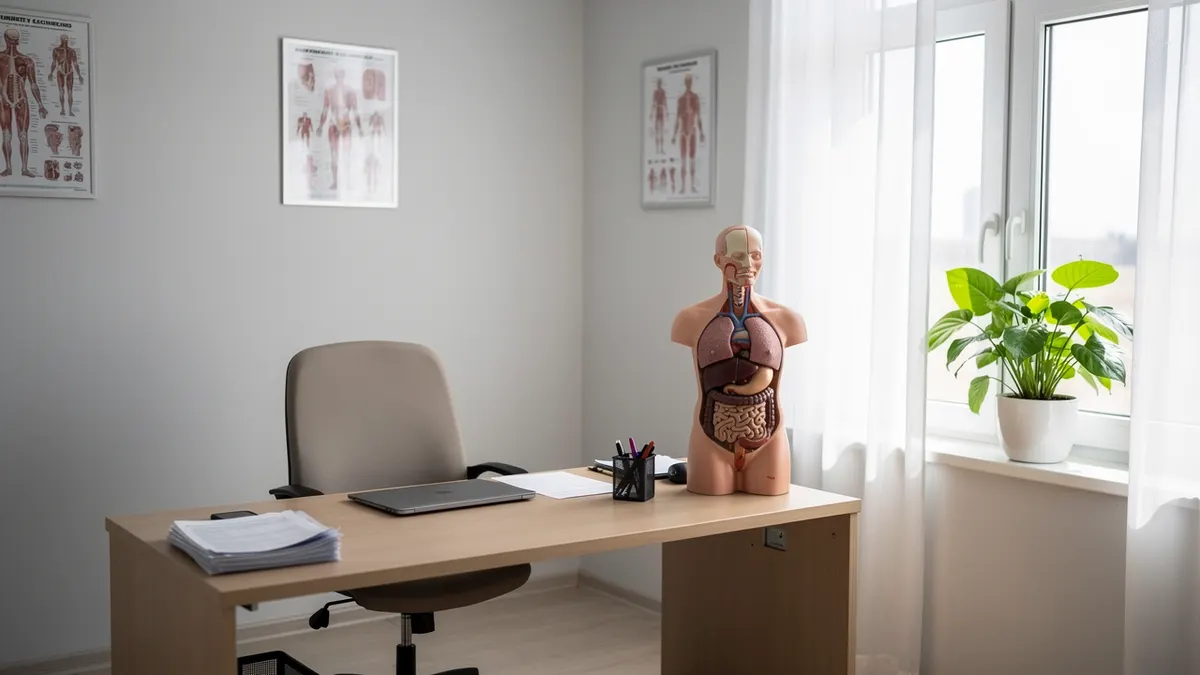
Show the entrance, the waiting room, the access, the parking, the empty treatment room. That is practical information, not a promise.
The explanation of the pathway
What happens, in order, from the first call to the follow-up.
Three elements: the duration, the number of appointments, what to bring. That video reduces calls to reception more surely than any leaflet.
Practical information
Hours, emergencies, booking, accessibility, languages spoken.
That is the least spectacular content and the most watched.
Health data
Three points, not negotiable.
No patient must be identifiable, including from behind, including in a reflection.
No document, screen or file must appear on camera.
And the shoot takes place with no patients present, or with an arrangement guaranteeing none will be filmed.
One further precaution: the team members filmed sign a permission, with a duration, and the fate of the video is planned if the person leaves the practice.
Which creators to hire
Three criteria, in this order.
Somebody able to film cleanly in a clinical space, often poorly lit and shallow.
A habit of working with a script approved word for word, without improvising.
And enough understanding of the subject to ask the practitioner the right questions during the shoot.
One particular casting point: if a person practising a health profession appears, they come under their own professional obligations, in addition to the rules applying to the practice.
What is possible and what is not
| Subject | What remains possible | What is ruled out |
|---|---|---|
| The premises | Showing reception and the route | Filming a treatment room in use |
| The team | Presenting a profession | Medical advice on camera |
| A patient | Nothing without written consent | A testimonial about results |
What is prepared with the institution
The management's permission, an escort, the restricted areas, and written consent collected from every recognisable person, patient or carer alike.
What is systematically referred elsewhere
A diagnosis, a treatment, an expected result and any comparison between practitioners. The communication rules are strict, to be confirmed with a lawyer.
What can be filmed, and on what terms
| The element | What is possible | The condition |
|---|---|---|
| The premises | Reception, waiting room, access | No identifiable patient |
| The staff | A presentation of the organisation | Written consent from each person |
| A device | Handling by a professional | Approved and sourced wording |
What is never shown
A file, a care screen, a patient's face. Those images fall under professional confidentiality, and publishing them exposes the organisation far beyond a simple communication problem.
What the video can say without risk
The place, the welcome, the practical organisation, the access and the opening hours. Anything touching diagnosis, treatment or expected outcome is explicitly referred to a health professional.
What is measured
Three indicators, in this order.
The number of online bookings in the ten days following publication.
The number of calls to reception about questions already covered in video: it should fall.
And the rate of missed appointments, which drops when the pathway has been explained in advance.
One last marker, specific to this sector: the video that fills a diary is almost never the one putting the practitioner forward. It is the one answering the question people do not dare ask on the phone.