How to film scale and sparkle, what removes doubt before purchase, and which creators to hire.
The real problem is scale
Three reasons why the buyer hesitates.
Catalogue photos are taken in close-up: the ring always looks bigger than it is.
Dimensions written in millimetres speak to nobody, except professionals.
And mental comparison fails: with no known reference, a fifteen-millimetre pendant evokes nothing.
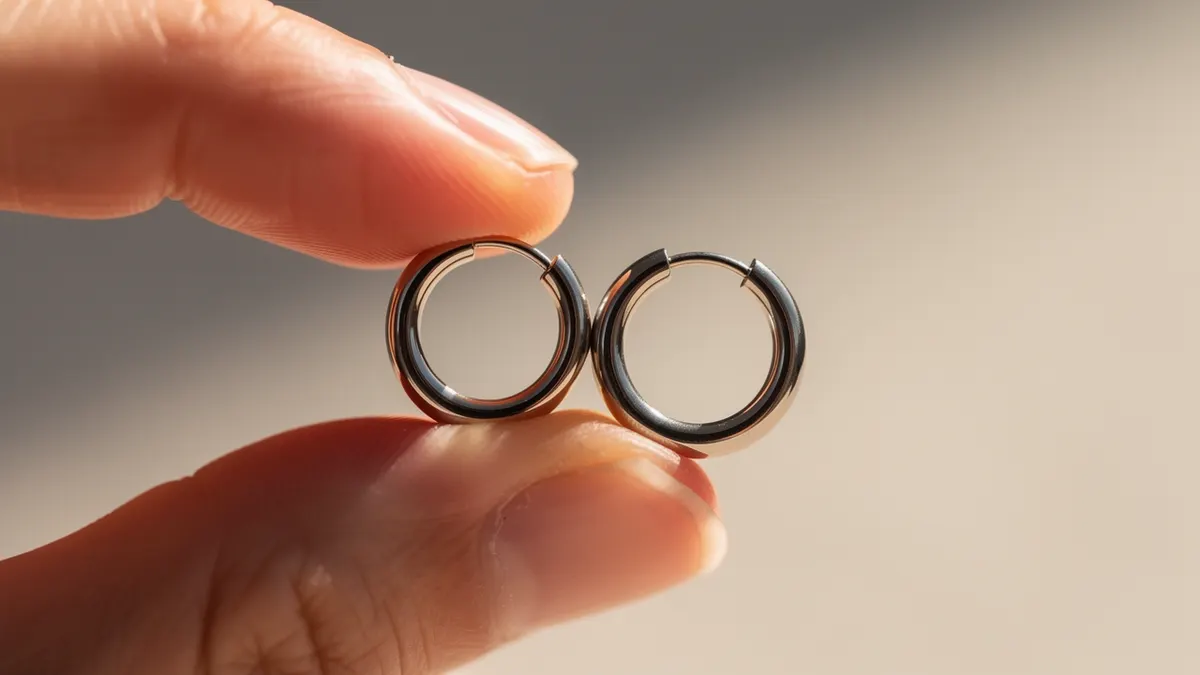
The answer is one shot: the piece worn, filmed at normal distance, then in close-up on the hand or the neck. The difference between the two views answers the question without a single figure being spoken.
On the body, not on the table
Four shots, in this order.
The piece resting on the skin, still, for colour and contrast.
The piece in movement, for the sparkle.
The piece in an ordinary situation: typing on a keyboard, holding a glass, pushing up a sleeve.
And the piece seen at conversation distance, that is as others will see it.
One shot to avoid: the piece on black velvet. It is flattering, it informs about nothing, and it looks like every image on the site.
What removes doubt before purchase
Five pieces of information, to give out loud and on screen.
The real size, compared with a known object.
The felt weight: a piece that is too heavy comes off after an hour.
The chain length, shown on the body, not announced in centimetres.
Care: what tarnishes, what can be cleaned, what fears water.
And the material: what it contains, what it becomes with time. Those statements sometimes come under precise labelling rules, and are checked with a lawyer before publication.
A sixth element, often decisive: the clasp, filmed being opened and closed with one hand.
Which creators to hire
Three criteria, in this order.
Hands and a neck representative of your customers: different body shapes and skin tones, rather than a single profile.
An ability to film in natural light with no stray reflection, which is the real technical difficulty of the category.
And calm gestures: in this field, a slow movement is worth more than a fast edit.
One criterion not to overweight: the follower count. A jewellery video mostly serves the product listing and advertising, where the hand counts more than the audience.
What the light decides on a shiny object
| Source | Effect | When to use it |
|---|---|---|
| Diffuse side light | A soft, long reflection | Polished metal |
| A small point source | A sharp sparkle | Stones and facets |
| Direct frontal light | A white blob | To avoid |
What is prepared before filming
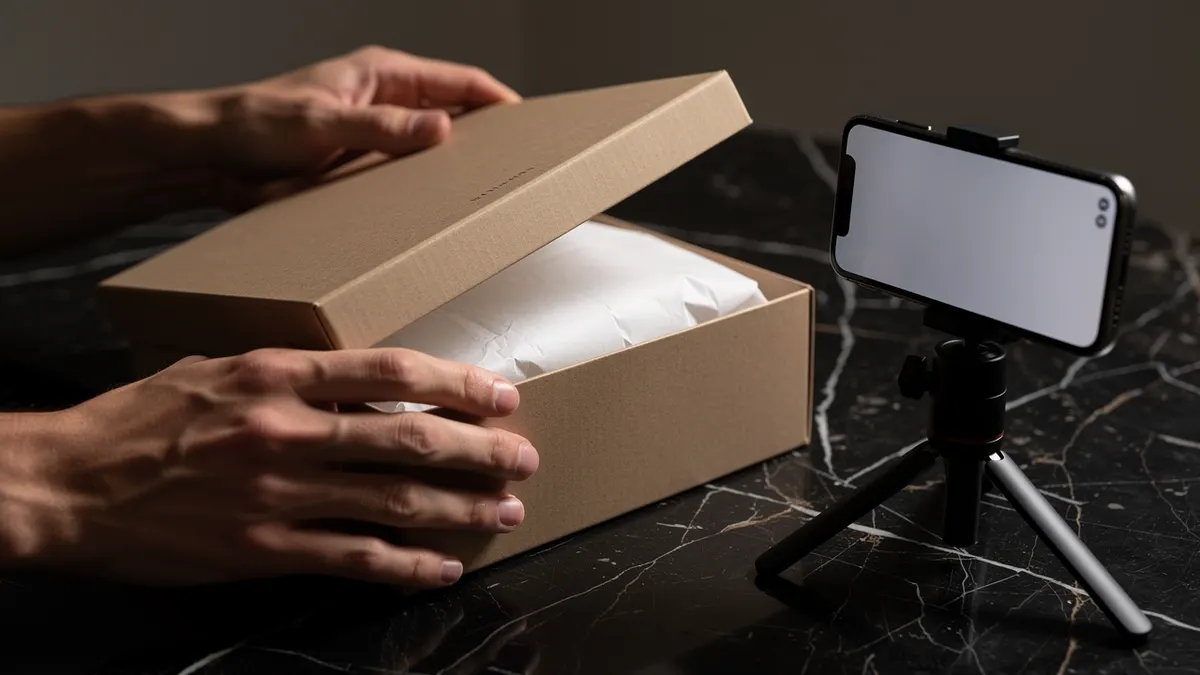
A microfibre cloth, gloves, a matte background and a mount that does not move. A fingerprint in close-up is visible and forces a full restart.
What is shown to reassure about size
The object worn, compared to a hand or a wrist. A photo on a white background says nothing about scale, and that is the first question in the comments.
The French calendar
Four moments concentrate demand.
The end-of-year festivities, by far the first peak: videos are ordered in September and delivered in early November.
Valentine's Day, the second peak, prepared in December.
Mother's Day, prepared in March.
And weddings, from spring to summer, with a different content need: rings, guest gifts, jewellery worn in groups.
One arrangement that works: shoot the first two peaks in the same session, changing the outfit, the light and the mood. The cost per video falls sharply, and the brand does not have to hunt for an available creator in high season.
One last marker, valid for the whole category: in jewellery, the return rate depends almost entirely on two factors, the size and the colour of the metal on the skin. A video honestly dealing with those two points earns more money than a video making the piece look better than it is.
Sources
- Urssaf, official auto-entrepreneur portal
- Service Public, how to become a micro-entrepreneur
- Service Public, crossing the micro-entrepreneur turnover thresholds
Checked on 4 September 2026. Thresholds and rates change: where this guide and the official source disagree, the official source is right.