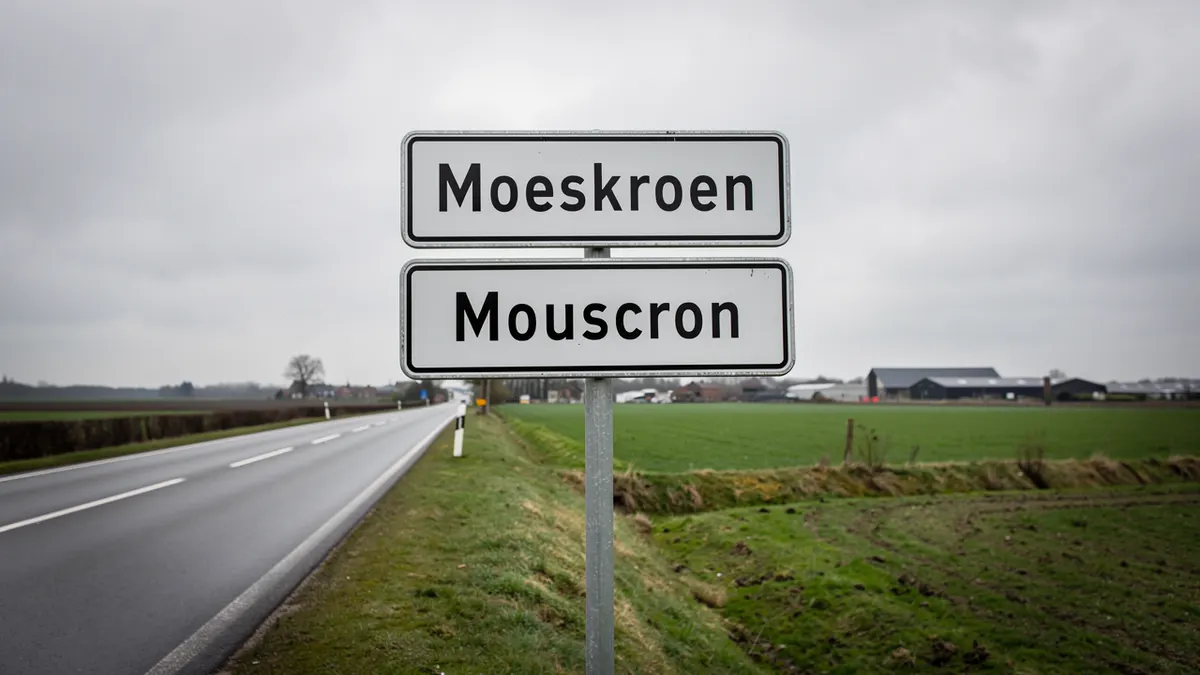
Brands keep asking which language to shoot their Belgian video in. The question has no answer, and that is the whole brief.
One country, two consumer markets
Belgium is handled as two markets sharing an administration, not as one country with two display languages. Buying habits, the media people follow, cultural references and the creators available all differ from one side to the other. A campaign designed for one of those markets works very well, as long as you accept that it covers only one.
What the split does to a budget
Six concrete consequences, often discovered along the way.
Production cost does not double, but it rises by half.
The distribution budget, by contrast, really does split in two.
Two creators, two briefs, two rounds of feedback.
Two sets of subtitles, proofread separately.
Two calendars, rarely in step.
And two performance readings, never directly comparable.
What actually changes between versions
Seven differences, beyond the language.
The speaking pace, faster on one side than the other.
The shop and retailer references.
Price formats and promotion habits.
Spontaneous objections, which do not land on the same points.
The platforms actually used.
The level of humour tolerated in advertising.
And everyday words, which are not the same as elsewhere.
Why subtitles are not enough
Six reasons, all visible to the naked eye.
The voice is still the other market's, and it is audible.
The gap between image and text breaks the first second.
Gestures and settings give the origin away.
The edit's rhythm follows the original language.
Reading consumes the attention meant for the product.
And paid advertising often penalises little-watched creatives.
Brussels, a third case
Brussels is not a compromise between the two markets, it is a distinct case: bilingual, very international, with urban consumption habits and a partly English-speaking public. A Brussels campaign is treated as a third version, or not at all, but never as an average of the other two.
What Belgian brands already know
Six habits common among local advertisers.
They plan two versions from the first quote.
They pick creators who live on the right side.
They test first in the market where they already sell.
They keep the rushes to produce the second version more cheaply.
They avoid heavily national references.
And they measure separately, never combined.
Which sectors buy
Seven categories, from the most active to the most discreet.
Food and drink, carried by retail.
Cosmetics and personal care.
Home and DIY.
Financial services and insurance.
Cross-border online retail.
Short-haul tourism.
And health in the broad sense, with its own constraints.
The cross-border trap
Six easy mistakes when you also sell next door.
Reusing as-is a video made for a neighbouring country.
Showing prices or promotions not valid locally.
Naming a retailer absent from the Belgian market.
Ignoring differences in delivery terms.
Forgetting that payment habits differ.
And assuming a neighbouring creator will be read as local.
Advertising disclosure is not optional
A paid collaboration must be identifiable as such, and the applicable rules are checked with the competent authority and, in case of doubt, with a lawyer. This remains general information. In practice, the disclosure must be visible without effort, from the start of the content, and in the language of the version being run.
How to brief a Belgian creator
Seven details to write down.
The target market, named explicitly.
The shooting language, and the subtitle language.
The permitted local references.
The retailers that can be named, and those to avoid.
The partnership disclosure, in the right language.
The price format, if it appears.
And whether the video will or will not run in the other market.
What a bilingual campaign costs
Six markers for building an honest budget.
A first version, at normal market price.
A second version, cheaper if the concept is identical.
Two sets of subtitles, invoiced separately.
Two creators, with no pooling possible.
A genuinely separate distribution budget.
And headroom for a third Brussels version, if it is justified.
Recruiting on the right side, and in what order
Seven checks before signing.
The city of residence, not only the declared language.
The comments on their past videos, and in which language.
The retailers that appear in their content.
Their ability to shoot without translating a supplied script.
Their ease at improvising in the version's language.
Their availability for a second version a month later.
And their agreement not to appear in the other market's version.
The calendar of a two-stage campaign
Seven steps, across six weeks.
Week one: brief written for the priority market.
Week two: shoot and first version.
Week three: release and first readings.
Week four: concept adjusted on what was seen.
Week five: shoot of the second version, concept already proven.
Week six: release in the second market, on a separate budget.
And at the end, a market-by-market comparison, never combined.
Where a brand should start
Six decisions, in this order.
Choose the priority market, as explained above.
Give it a whole budget, not half.
Recruit a creator who actually lives there.
Produce three videos, not one.
Measure over a full month.
And launch the second market only with what you have learned.
Five targeting mistakes to avoid
Five settings that waste a good video.
Targeting the whole country instead of the intended market.
Letting the interface language decide the targeting.
Running both versions on the same audience.
Forgetting to exclude the second version from the first market.
And comparing results before the first month is out.
Who buys, and what they ask for
| The buyer | Their typical order | Their specificity |
|---|---|---|
| An online brand | Variants every month | Often two languages |
| A local business | Venue and product videos | One language, theirs |
| An agency | Regular batches | A strict framework |
What structures this market more than elsewhere
Bilingualism. One campaign often needs two voices, which doubles the value of a shoot and makes bilingual profiles markedly more in demand than others.
What makes income vary here
The ability to deliver in both languages, and the share of clients located abroad. Two creators of identical technical level have completely different books depending on those two points.
What to measure, market by market
Six indicators, always kept apart.
Acquisition cost, per market.
Thirty-second retention, per version.
Cost per usable video.
The share of comments in the wrong language, a sign of poor targeting.
Subtitle performance, tested separately.
And attributed revenue, never combined for the whole country.
One last marker: Belgium rewards brands that choose and punishes those that average. One well-made campaign in a single market beats two lukewarm ones.