The whole sale rests on one doubt: what condition will it arrive in. A product page never removes it, a twenty-second video removes it entirely.
The unboxing is the product
It is not one format among others, it is the only one that counts here.
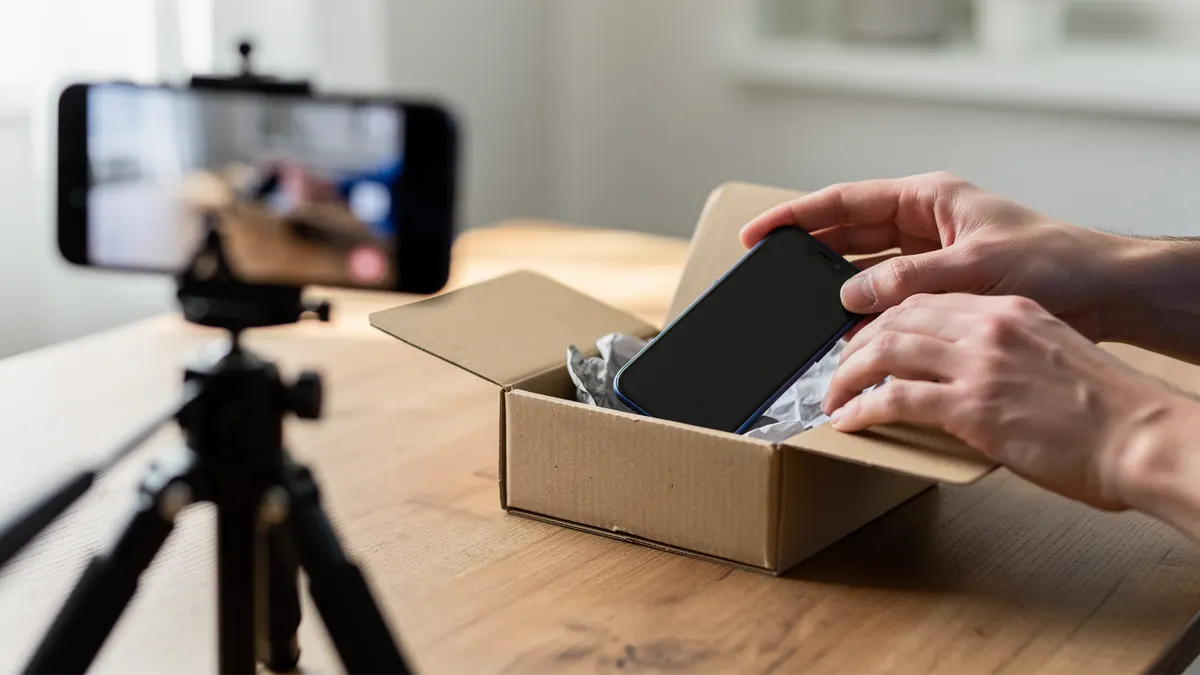
The parcel as it arrives, the opening in one take, the object taken out, turned over, lit close up. The marks, the micro-scratches, the corners, the screen seen at an angle that reveals the flaws instead of hiding them.
Add what is included: cable, charger, original box or not, accessories. That is the second source of disappointment after condition.
Explaining the condition scale
Nobody understands your grades, and nobody will admit it.
Translate them into images: this is what each level means, on a real object, in close-up. One video per grade is enough, it serves all year and it cuts the volume of pre-purchase questions.
Say too what a grade does not guarantee. That sentence is what spares you the returns.
Warranty and returns, on screen
That information always exists in the terms, and nobody reads it.
Show it: the duration, what is covered, who pays for the return, how long a replacement takes, who you write to. Film the form filled in on screen rather than stating a promise.
The statements applicable to warranty and to buyer information depend on the sector and are checked before going live, with a lawyer in case of doubt.
The buyer is comparing with new
They have both tabs open, and the price gap is the only reason for their hesitation.
Answer it directly: what buying new would give them extra, what refurbished makes them lose, and why the price gap is justified. An honest comparison convinces better than a sales pitch.
Never compare with a named competing product: that form of comparison falls under precise rules that are checked before publishing.
What must not be hidden
Whatever will be visible on delivery.
A slightly marked casing, a colour not chosen, a battery capacity given as a percentage, no original box. Saying those things in advance turns a future dispute into an argument for transparency.
Which creator profile works
Somebody who has genuinely bought this type of product, not a presenter.
The right tone is that of a doubt resolved: I was afraid of this, here is what I received, here is what I think three weeks later. The second video, shot a month later, is often worth more than the first.
What this market asks you to show
| The buyer | Their typical order | What they require |
|---|---|---|
| A refurbished-goods platform | The product's real condition | An honest description of flaws |
| A repairer | The technical gesture | The warranty stated exactly |
| A second-hand shop | The object and its history | No promise of newness |
What actually reassures a second-hand buyer
The flaw shown. A scratch filmed close and named does more for trust than a flattering shot, because a buyer who discovers the flaw on delivery asks for a refund.
What to check before mentioning a warranty
The exact duration and what it covers, supplied by the seller. Legal warranty rules vary by country, and a video that summarises them badly commits the seller more than it helps them.
What to measure
The return rate and the reason for return.
If returns for non-conforming condition fall after the grade videos go live, the content has done its job. It is the only measure that counts in this category, and it is available in your own systems.