Selling something you cannot touch is the hardest problem in UGC. An app, a financial service or a platform has no texture, no smell, and cannot be tasted on camera.
It is nevertheless the category that pays best in Argentina, and that is not a coincidence.
Why this category pays better there
Two traits of the country combine.
First, digital payments and wallets entered daily habits far faster than in many other markets. Paying by code, transferring between apps, running several accounts from a phone: these are ordinary gestures, not novelties that need explaining.
Second, trust in financial institutions is low, and it has to be earned. An Argentine user does not open an account because the interface is pretty. They open it when someone like them says they put their money in and nothing bad happened.
The consequence for your work is direct: in this category it is not the demonstration that sells, it is the removal of an objection. And an objection is not removed by a brochure, it is removed by the testimony of a person who had it.
What converts for an intangible product
The problem before the solution. Fifteen or so seconds showing the concrete frustration the product removes. Without it the demonstration means nothing, because nobody knows what it replaces.
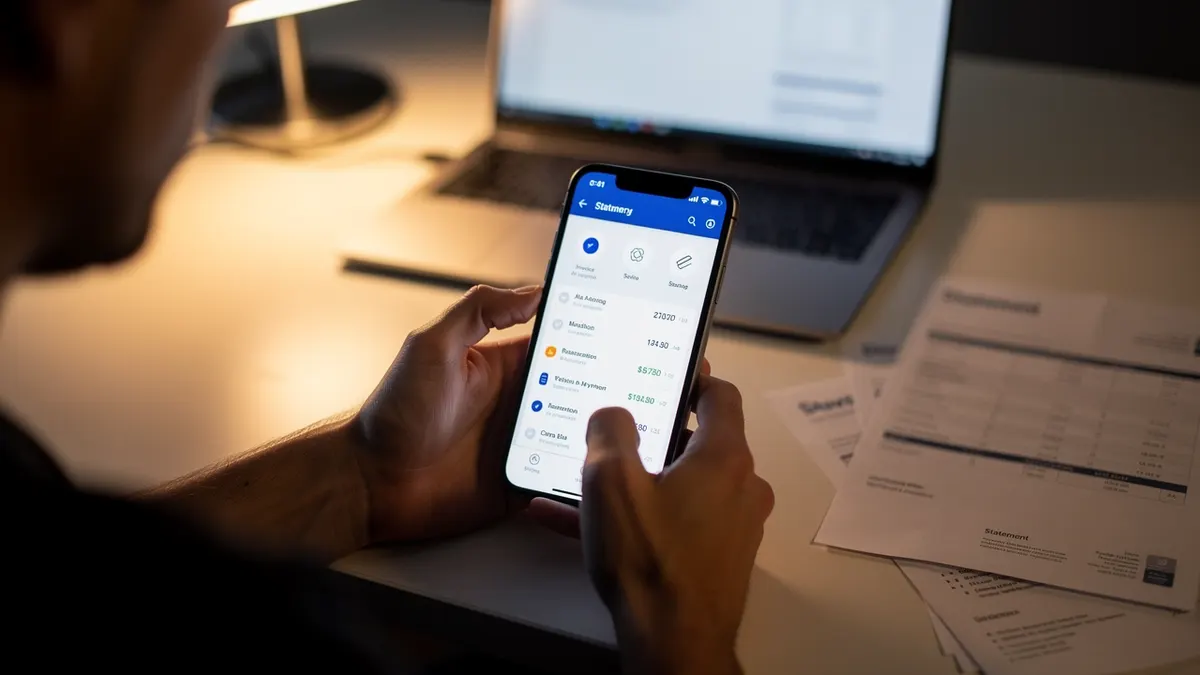
Screen recording with voice over it. Raw, no effects, with a real finger hesitating before it finds the right button. It is the most profitable format in the category and the cheapest to produce.
The moment of relief. The face of someone settling in two taps what used to take half an hour. It is the only emotional image available when the product has no body.
The testimony of the one who did not believe in it. Saying the reluctance out loud, then what dispelled it. This works best exactly where trust is the real brake.
The specific case rather than the adjective. Not "it saves time", but how long the task used to take and how long it takes now. The number comes from the user, it is not supplied by the brand.
Which creator to hire
The one who can explain, not the one with the best image. It is the only category where clarity beats charisma.
Look for genuine user profiles. If the app is aimed at freelancers, hire freelancers: they will mention details no brief could have anticipated, and those details are exactly what triggers the install.
Avoid the creator who looks too professional as well. In technology, excess polish makes the video read as an ad before it has explained anything, and you lose the one advantage you had.
The brief, and the list of what cannot be said
Give the exact flow to show, step by step. State which data must be masked in the screen recording, which objection is the main one to address, three possible openings.
And attach the list of what may not be claimed. In financial services that list is not a comfort measure: promises of returns and statements about the safety of funds are regulated. When in doubt about wording, the source to check is the competent authority, not an example found at a competitor.
Finally, ask for a version where the brand does not appear in the first seconds. Ads that do not look like ads at the start hold attention markedly better.
What decides the purchase of a device
| Question | The shot that answers | Length |
|---|---|---|
| How long to set it up? | Unboxing to the first screen | 30 s |
| Is it noisy? | The device running, live sound | 8 s |
| Is it heavy? | The hand lifting it | 5 s |
What can be filmed without showing the screen
The handling, the ports, the cable and its length, the size compared to an everyday object.
What must be masked
Any personal data, a serial number, an account identifier, a network visible in the settings.
How many pieces to order
More than in other categories. An intangible product sells through very different angles: the problem, the time saved, the safety, the price. Six pieces with three openings each is the minimum needed to learn which of those angles carries, and that learning is worth more than the videos themselves.