A narration laid over images costs less, is corrected faster and can be produced in several languages. It also destroys certain videos, and you need to know which ones.
The advantage nobody calculates
It holds in three points, and it is mainly economic.
A voice-over video is corrected without reshooting: a badly chosen word is re-recorded in five minutes, whereas a sentence said to camera requires a new session.
It is produced in another language without redoing the image, which halves the cost of a bilingual version.
And it allows filming with nobody available: the hands, the product, the place are enough.
When it is the right choice
Four situations, all frequent.
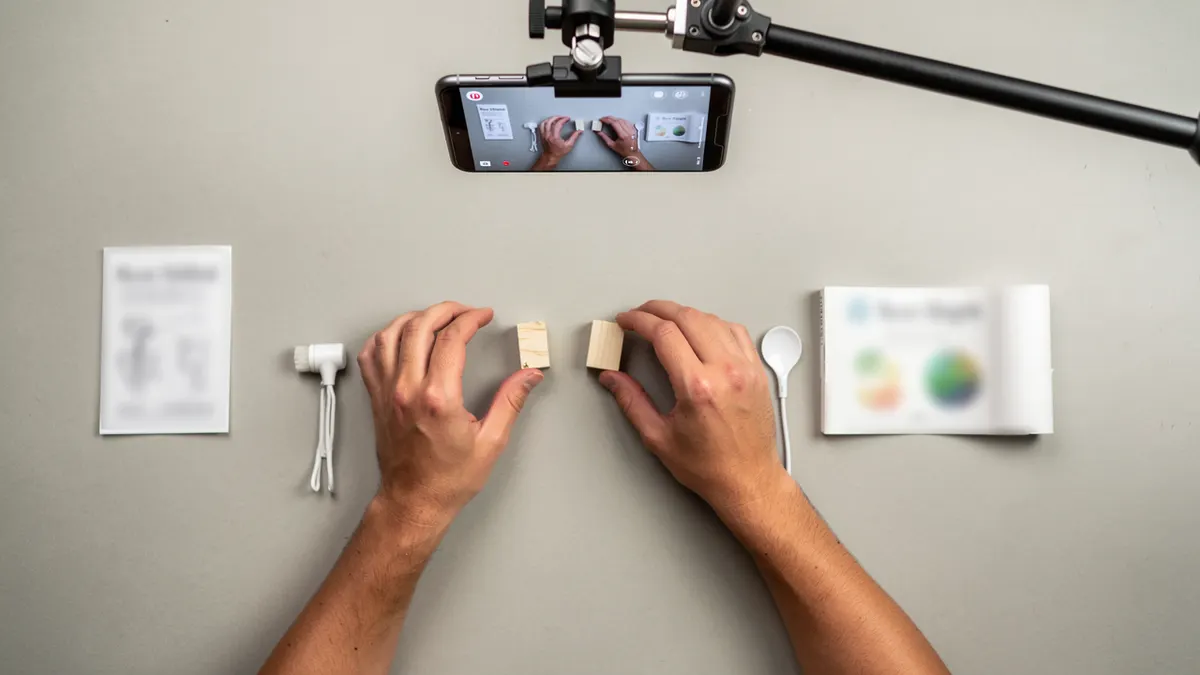
The technical demonstration, where what matters is the movement and not the face.
Content where nobody wants to appear, which is more common than people think.
The video intended for several markets, which will have to exist in two or three versions.
And product page content, where the voice explains while the image shows.
When it destroys the video
Three cases, and they have one thing in common: the video was supposed to prove something personal.
The testimonial. An experience recounted by a voice you cannot see loses exactly what made it credible.
The long-term usage review, where you want to see the person who used the product for three months.
And everything resting on trust: health, money, safety, children.
In those cases, voice-over turns proof into a sales pitch.
Do not dub a real person
That is the most visible mistake, and it often happens in the bilingual version.
A person filmed speaking, covered by another voice, produces a mismatch the audience spots immediately: the lips do not follow, the intonation does not match, and the video becomes a translated advert.
Two correct solutions. Reshoot the person in the other language, which remains the best option. Or edit the language version as pure voice-over, removing the shots where somebody is seen speaking.
The sound requirement rises
That is the trade-off of the format, and it is absolute.
When the voice carries all the information, the slightest flaw is heard: reverberation, hiss, background noise, a badly cut breath.
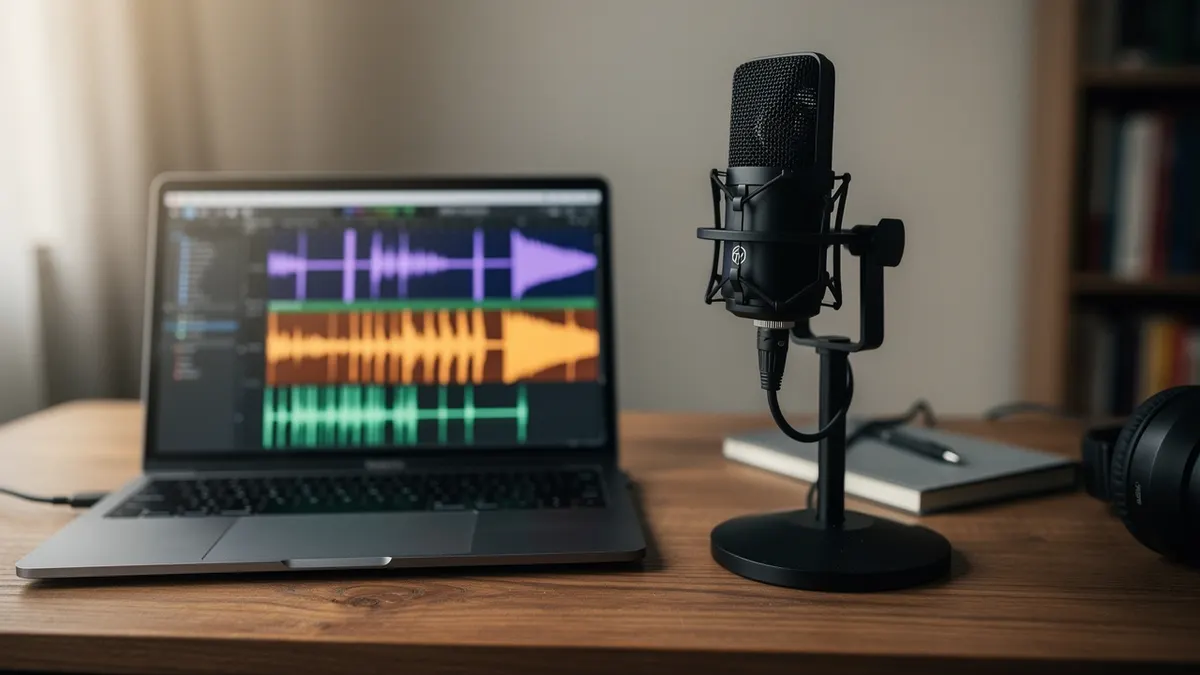
Three rules are enough. Record in a room with fabric, never in a bathroom or an empty office. Bring the microphone close and speak at a constant level. And record thirty seconds of silence in the same room, which will serve to clean the background.
Add a safety take: the same sentence said twice, with a different rhythm. The edit will choose.
What a voice-over makes possible
| Advantage | What it changes | The trade-off |
|---|---|---|
| No face on screen | No consent to collect | Less attachment |
| A re-recordable script | A fix without reshooting | A tone to watch |
| One voice, several languages | Fast versions | Synchronisation to redo |
What is looked after when recording
A furnished room, a mic twenty centimetres away, a glass of water within reach and two complete takes. A recording in an empty room echoes and cannot be repaired.
What is aligned in the edit
Each sentence on the shot it describes. A voice announcing a gesture before it appears on screen feels like a dub, and the viewer drops off.
The bilingual point
It changes the production calculation, and it is the format's main argument here.
A video whose image shows nobody speaking can exist in two languages from the same edit. The cost of the second version comes down to one recording session and an export.
Two precautions. Write the text separately in each language rather than translating: a translated sentence never falls on the same picture length.
And record both versions on the same day, with the same person if they are bilingual, or with two people whose voices are similar in tone.