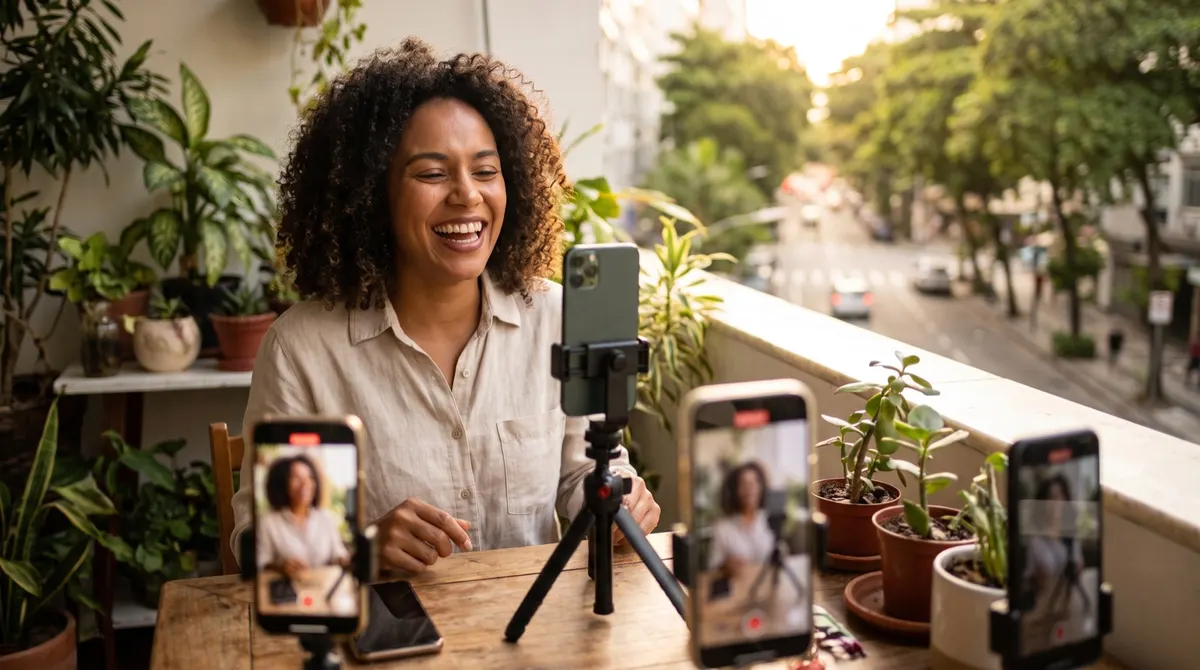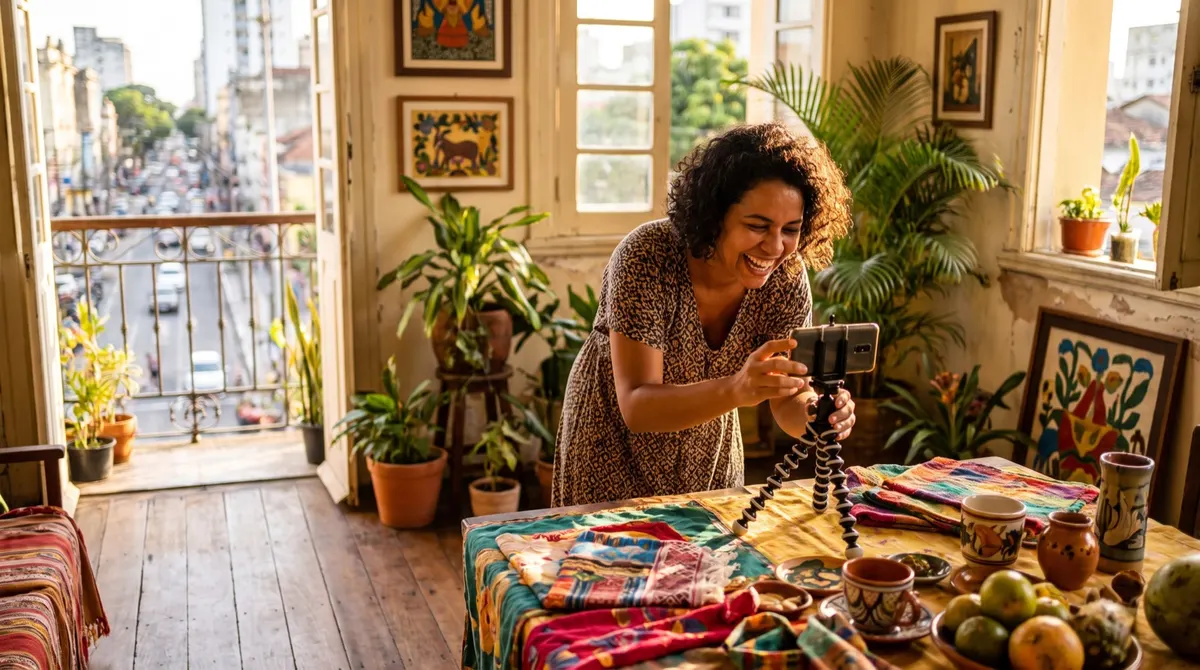
Belem is where the Amazon meets the Atlantic, and where a very particular content market has grown up almost unnoticed. The capital of Para is a city of four hundred years of history, a river port, a food culture that people fly across the country to taste, and the largest religious procession on earth. For a creator working in user generated content, that combination is an asset: almost nobody else is producing brand video from the North, and what you film here does not look like anything shot in Sao Paulo.
A city with culture the rest of Brazil wants to see
Belem lives around Ver o Peso, the riverside market where acai, tucupi, jambu, pupunha and a hundred Amazonian fruits arrive by boat every morning. Its food scene is one of the most distinctive in Latin America, and the world found out about it when the city hosted the global climate summit and put the Amazon on every front page. The Cirio de Nazare, in October, brings millions of people into the streets and reorganises the entire local economy for weeks.
That gives local creators two things at once. First, a visual identity that no filter can fake: river, market, rain, colour, and a way of speaking that immediately reads as authentic to a Brazilian audience. Second, a calendar of moments where brands want presence and have very few local people able to deliver good video quickly.
The niches that hire in Belem and the North
The North is not a small version of the Southeast, it has its own spending categories. These are the ones that actually generate paid work:
- Food and gastronomy: acai producers, restaurants, regional sweets, delivery apps and the growing wave of brands exporting Amazonian ingredients to the rest of Brazil.
- Natural cosmetics and bioeconomy: oils, butters, soaps and skincare built on Amazonian raw materials, a category where a creator filming in the region carries real credibility.
- Tourism and hospitality: hotels, river tours, ecotourism operators, events and everything that grew around the international attention the city received.
- Fashion and local retail: regional labels, swimwear, shops in the malls and small ecommerce brands that ship across the North and Northeast.
- Health, education and services: clinics, colleges, gyms and professional services aimed at a young urban population.
How local creators build a client base
In Belem, closeness works. The market is small enough that the owner of the restaurant, the clinic or the cosmetics brand is often one message away, and WhatsApp is where the deal actually happens. Creators build a public portfolio on Instagram and TikTok, tag the businesses they genuinely like, and send short pitches with two or three examples. One good local client leads to several others, because the business community here talks.
The second route matters more for income. National brands want Amazonian scenery and regional accents, but they rarely know who to call in Para. Creators who present themselves properly, with a MEI registration, an organised portfolio and a clear rate card, get found by agencies and by brands from the Southeast. Registering on a UGC marketplace does the same job at a distance: a brand in Sao Paulo, Lisbon or Miami searching for a Portuguese speaking creator in the Amazon region will find a profile long before they find a person.
Working remotely from the North
Everything that makes UGC portable applies here. You film at home or outdoors, edit on your phone or laptop, and deliver files online. Two local realities are worth planning around. Delivery times are longer, so when a brand ships you a product, add a week to your schedule and say so in the brief instead of missing a deadline. And the weather is a real production factor, since heavy afternoon rain is normal for months at a time, which makes morning filming and a plan B indoors part of the job.
Handled well, both become selling points. A creator who says "send it two weeks before the campaign and I will deliver on the agreed date, rain or not" sounds like a professional, not like a risk.
What creators can charge
Rates in Belem depend on experience, usage rights and turnaround, but a few ranges give you a starting point. A single UGC video for a local business commonly sits between R$ 150 and R$ 400 at the beginning. Creators with a strong portfolio often charge R$ 400 to R$ 900 per video, and packages of three to five videos are usually sold between R$ 1.000 and R$ 3.000. National and international clients pay noticeably more than local ones, which is why your portfolio should be built to travel beyond Para. Usage rights for paid media, exclusivity and extended licensing are billed separately. Use these as reference points, not fixed prices.
Where to go next
Belem gives you scenery, culture and a story that creators in the South cannot film, with a fraction of the competition. The path forward is to turn that into a portfolio that brands outside the region can find. Our guide on how to become a UGC creator covers building that portfolio, setting your rates and landing your first paid collaborations, from Belem or anywhere else in Brazil.
Publish your creator profile →
What an estuary and market city orders
| The buyer | Their typical order | Their constraint |
|---|---|---|
| A fruit or plant producer | The product and its origin | The harvest season |
| A restaurant or caterer | The gesture and the plate | An off-service shoot |
| A market trader | The stall and the exchange | Neighbouring stalls' consent |
What humidity and rain impose
A shoot concentrated in the morning and protected kit. Late-afternoon showers are regular, and a schedule that ignores them loses half its outdoor sequences.
What makes a market shot sellable
Consent and closeness. A stall filmed from afar tells nothing, whereas a fruit taken in hand, with the trader who said yes, reads immediately as proof of origin.
Sources
- Portal do Empreendedor (MEI), Brazilian government
- Receita Federal, Brazilian tax authority
- Simples Nacional, official portal
Checked on 26 August 2026. Thresholds and rates change: where this guide and the official source disagree, the official source is right.