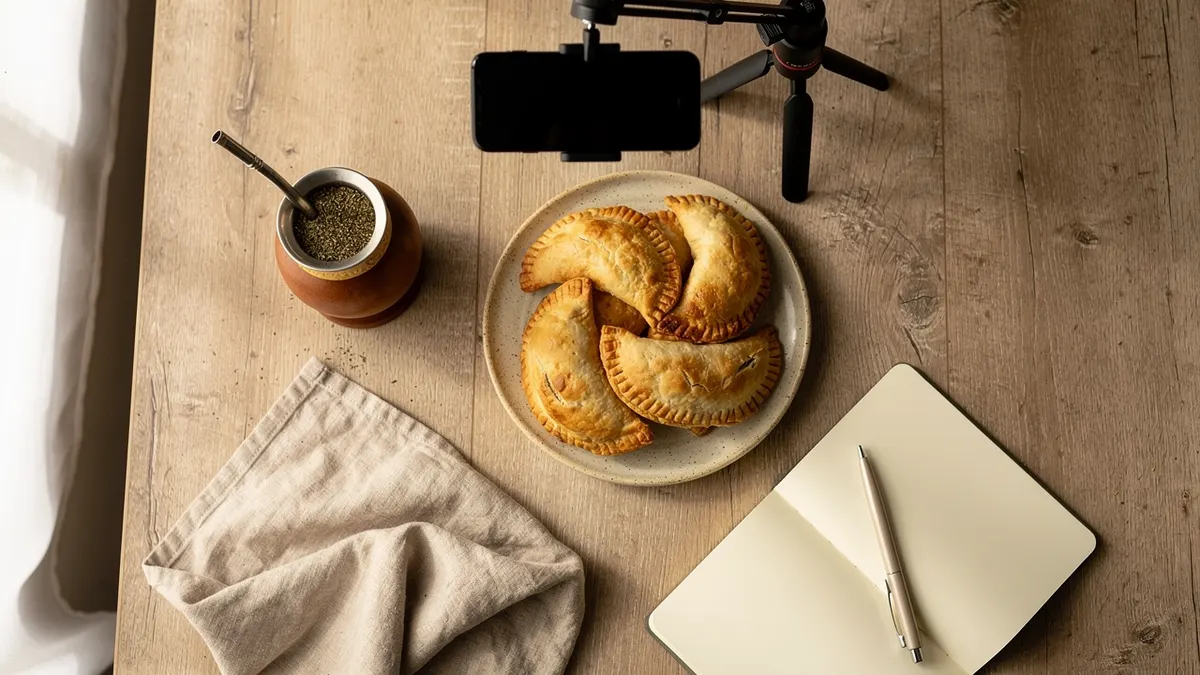
Rosario is a port city that lives off moving what the Argentine countryside produces, and that base explains almost everything else: a significant food industry, strong retail, a historic creative scene and an intense urban life on the bank of the Parana. For a creator working in user generated content, it is a mid sized market with real budget and far less competition than Buenos Aires.
An economy of port, food and retail
The agricultural export complex sits a few kilometres from the centre and drags logistics, professional services, machinery and a food industry with it, from the mill to the biscuit brand. Retail grows around it: clothing, footwear, home decor, restaurants and a network of businesses that sell both in store and through Instagram.
Rosario also has a creative tradition you can feel. Design, music, advertising and football are part of the city's identity, and that translates into local brands that understand the value of a good piece of communication rather than asking only for the lowest price.
The categories that hire
- Food and restaurants: consumer brands, bakeries and restaurants, breweries and delivery. Real reaction, first bite, quick recipe.
- Clothing and footwear: downtown shops, fashion ecommerce and own labels shipping across the country.
- Health and aesthetics: clinics, dentistry, dermatology and physiotherapy centres, always with the care health advertising requires.
- Agriculture and services: inputs, machinery, insurance and farm software, a category with a high ticket and very few creators.
- Fitness and sport: gyms, supplements and sportswear, supported by a football culture that is everywhere.
- Home and decor: furniture stores, renovation and decor ecommerce, where before and after formats sell themselves.
How creators find clients
In a city this size, proximity works in your favour. The shop owner, the clinic manager or the marketing lead at the food company are one message away, and a short pitch with two samples converts far better than a generic message. One satisfied client usually brings two or three more, because the Rosario business circuit knows itself.
The income jump, though, comes when you stop depending on local clients. Brands in Buenos Aires and abroad need Spanish language content constantly, and they hire remotely without ever meeting the creator. That takes three things: monotributo in order so you can invoice, a portfolio sorted by category, and being where brands search, for instance a profile on a UGC marketplace showing niche, language and prices.
Filming and delivering from Rosario
The work is portable. You film at home or outdoors, edit on a phone or a laptop, and deliver online. The riverfront, the historic centre and the neighbourhoods give recognisable, varied backdrops without spending on production.
Two practical notes: ask for the product with margin if the client ships it from another province, and use the morning light by the river, which is the best in the city and costs nothing.
What creators charge
In Argentina it pays to set the price in dollars and invoice in pesos at the exchange rate of the day, so inflation does not eat the gap between the quote and the payment.
As a reference: a single video for a local business starts at the equivalent of twenty five to fifty dollars. With a strong portfolio, seventy to a hundred and eighty dollars per video. Packages of three to five videos sell between two hundred and five hundred dollars. National brands pay above local ones, and international brands more again. Paid media rights, exclusivity and whitelisting are billed separately.
Where the budget sits
| Area | Type of client | Order frequency |
|---|---|---|
| Around the port | Logistics, export | Several times a year |
| Industrial estates | Agrifood | Seasonal |
| Town centre | Retail, restaurants | Occasional |
What opens the door of river companies
A sample filmed in an industrial setting, availability early in the morning and a compliant invoice.
What can be filmed on the first visit
A loading operation, a packing line, a team at work and a wide view of the site.
Where to go next
Rosario offers a diverse economy, brands that value communication and a lower cost of living than the capital. To turn that into paid work, our guide on how to become a UGC creator covers building the portfolio, setting prices and closing the first collaborations.
Publish your creator profile →---
Sources
Checked on 26 August 2026. Thresholds and rates change: where this guide and the official source disagree, the official source is right.