
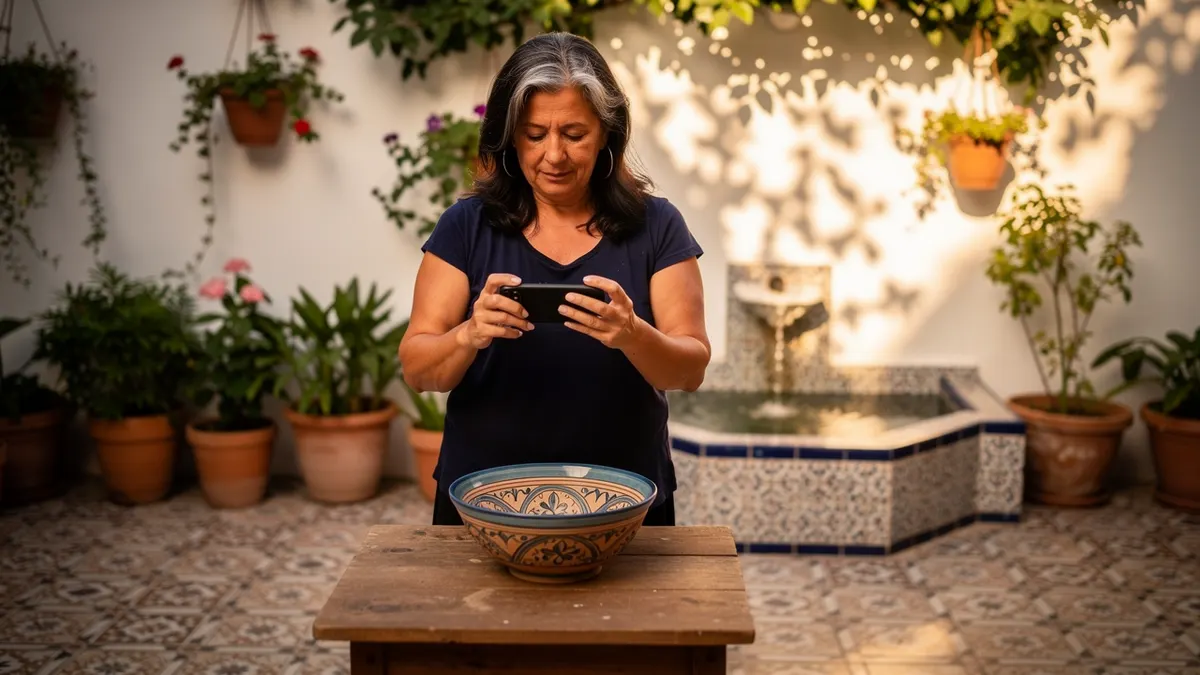
Seville works with an identity almost no other Spanish city can imitate: courtyards, tiles, golden light and a calendar organised around Holy Week and the April Fair. For anyone producing user generated content, that means backdrops brands from elsewhere are looking for, and a sharp seasonality worth understanding before you set your schedule.
An economy of tourism, food and services
Tourism leads most of the year, with a huge peak in spring and a softer one in autumn. Hotels, holiday apartments, restaurants, guides and city centre shops live off it. Food is the second leg, with a tapas culture that produces content almost on its own.
Then there is the real city: the university, the Andalusian administration, clinics, neighbourhood retail and an aerospace and logistics sector that communicates almost nothing on video. And a fourth leg that keeps growing: Seville has become a regular set for international shoots, which has left technicians, equipment rental and audiovisual culture in the city.
The sectors that hire in Seville
- Tourism and hospitality: hotels, apartments, experiences and restaurants, selling the visit months before it happens.
- Food and Andalusian products: olive oil, cured ham, local wines and brands that ship across Spain.
- Flamenco fashion and accessories: a sector with its own season, intensely visual, concentrating orders between January and April.
- Beauty and aesthetics: hair, nails, clinics and dermocosmetics, with an audience very active on social media.
- Local retail and decor: ceramics, craft and homeware, categories where close up detail sells.
- Services and health: dental clinics, opticians and medical centres, always with the care health advertising requires.
Working with the season rather than against it
The classic mistake is pitching in March. For Holy Week and the Fair, brands and businesses close their communication in January and February. By spring there is no calendar space and no response time left, only emergencies.
Out of season there are two ways out. First, clients who do not depend on tourism: clinics, retail, services, gyms. Second, and more profitable, selling outside: a brand in Madrid or abroad that needs courtyards, tiles and warm light in the middle of winter has nobody to film it if you are not on the map. A profile on a UGC marketplace solves exactly that part.
Filming in Seville without fighting the heat
From June to September the midday sun is unusable: it burns colour and leaves no workable shadow. You shoot early, very early, or in the last hour of the afternoon, when the stone gives back the golden tone the city is famous for.
Courtyards and shaded areas are the best free set you have: soft light, warm bounce and a background with character. And if you film in the centre in high season, expect people in frame and plan a fallback.
What creators charge
As a Spanish reference: a single video runs eighty to a hundred and fifty euros when you start and a hundred and fifty to three hundred euros with a strong portfolio. Packs of three to five videos sell between three hundred and fifty and nine hundred euros. In high season it pays to take a deposit when holding a date, because the calendar fills and cancellations cost money. Paid media rights and exclusivity are billed separately.
A summer day, hour by hour
| Slot | What you film | Why |
|---|---|---|
| 7 to 10 | Exteriors, streets, façades | Soft light, empty streets |
| 11 to 17 | Interiors, products, interviews | Heat makes outdoors impractical |
| 19 to 21 | Terraces, atmosphere | The city comes back out |
What protects the gear
A bag in the shade, a spare battery kept cool, a backup body, and never a closed car in full sun.
What is announced in the quote
The usable window, the indoor alternative and the fallback date in case of a heatwave.
Where to go next
Seville gives you a visual product almost nobody else has and a calendar that rewards whoever moves first. To turn that into paid work, our guide on how to become a UGC creator covers building the portfolio, setting prices and closing the first collaborations.
Publish your creator profile →---
Sources
- Agencia Tributaria, Spanish tax authority
- Spanish Social Security, self-employed registration (RETA)
Checked on 4 September 2026. Thresholds and rates change: where this guide and the official source disagree, the official source is right.